★★★★★
257 Reviews
Leggi tutte


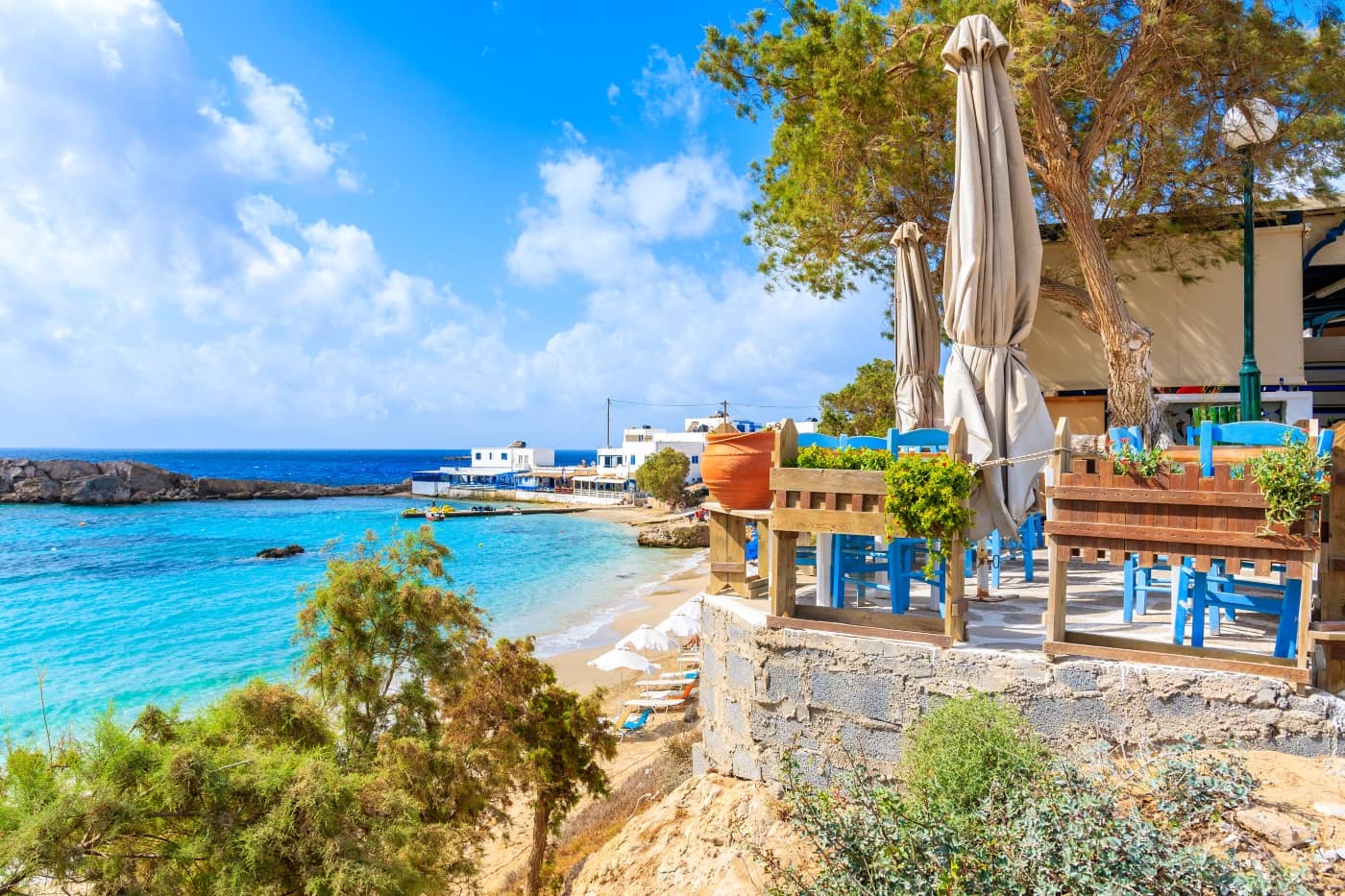
If you have already visited the best-known Greek islands, or simply want to discover a more authentic side of Greece, the shoulder season is the perfect time to do so without spending a fortune and, above all, without the crowds that come with overtourism.
In May, June, September and October, certain destinations reveal their true character outside the peak season and offer unforgettable holidays.
These are islands where you can still find traditional tavernas mainly frequented by locals, which says a lot in itself, almost deserted beaches where you can enjoy the first or last warm rays of sunshine, authentic villages with an air of mystery, a distinctly Greek pace of life — slow and stress-free — and much more affordable prices.
This is the Greece that many travellers dream of, but few truly know or have the courage to explore.
In this guide, you will discover 5 lesser-visited Greek islands that are perfect for the shoulder season, ideal for anyone seeking authenticity, nature, local experiences and plenty of relaxation.
These destinations are not for those looking for nightclubs or extravagant luxury, but they are perfect for anyone who wants to experience the real Greece and feel part of it.
Karpathos is one of the most authentic islands in the Dodecanese and probably one of the best choices for anyone seeking traditional Greece during the shoulder season. Be warned, though: in high season, it changes completely and falls prey to mass tourism!
The island still has strong local traditions and villages where life moves slowly, and this is precisely what allows it to preserve its true identity.
The island’s emblem is Olympos, a mountain village where its heritage is still very much alive and women continue to wear traditional dress during festivals and on other occasions too.
During the shoulder season, Karpathos comes into its own: temperatures are ideal, the wind eases and is less intrusive than in summer, the beaches are peaceful rather than overcrowded, and the atmosphere feels wonderfully authentic.
At this time of year, Karpathos is perfect for experienced travellers accustomed to sometimes demanding journeys, nature lovers drawn to its glorious spring scenery or warm autumn colours, photography enthusiasts and keen hikers.
Karpathos lies between the islands of Crete and Rhodes.
Reaching it at this time of year takes a little effort. You can fly there from Athens or Rhodes on a domestic flight, or travel by ferry from Athens, Rhodes or Crete.
Do not miss the village of Olympos or the beautiful beaches of Apella, Kyra Panagia and Achata. Explore its mountain villages, where time seems to stand still, the islands of Saria and Kasos, or the ancient Byzantine pools.
As we always recommend, let yourself “get lost” on the islands: every corner has something extraordinary and unique to offer.
You will be spoilt for choice when it comes to filling your days. There is certainly no shortage of activities on Karpathos. It is one of the best islands for hiking, with countless routes leading to enchanting places and views that will leave you speechless. Photography lovers can put together a portfolio to rival those of the finest artists: Karpathos has incredible colours that are hard to find on other islands.
Let its traditional villages capture your imagination. Each one is different, with a character of its own, offering a chance to rediscover age-old flavours and traditions.
Finally, fall in love with its crystal-clear sea, whose colours range from pale blue to emerald green. Explore the underwater world or let the waves gently rock you on a boat tour. You certainly will not get bored: Karpathos is full of surprises!
On islands such as Karpathos, food is part of the cultural experience, so forget about your waistline and try all the local delicacies, from Makaronia, the island’s traditional pasta, to its boldly flavoured cheeses and goat dishes. Then treat yourself to its honey-based sweets.
It always depends on the kind of holiday you have in mind. For families and couples looking for comfort, we recommend Pigadia, where everything is close at hand. For experienced travellers, the northern villages are an excellent choice.
Karpathos has plenty of ups and downs and is ideal for hiking — an excellent way to work off the extra pounds you will undoubtedly gain! Do not forget a good pair of walking shoes suitable for uneven terrain, a swimsuit for cooling off after a lovely walk, and a windproof jacket. Yes, Aeolus is very fond of Karpathos, and sometimes he refuses to leave for days.
Amorgos is one of the most captivating islands in the Cyclades and still attracts relatively few tourists, perhaps because getting there is not especially convenient. Given the crowds filling every corner of Greece, though, that may well be a blessing! The island is famous for the Monastery of Hozoviotissa, an imposing architectural masterpiece built into the rock face high above the sea.
It does not need to try to impress its visitors. It is beautiful just as it is: wild and deeply rooted in its traditions,
with an identity that mass tourism has yet to erase. Bare mountains alternate with rugged cliffs, villages of dazzling white houses and a remarkable sea with endless shades of blue. So much so that director Luc Besson chose this very island as the setting for his masterpiece, The Big Blue.
Here, time still seems to follow the rhythms of nature. Most of its beaches are difficult to reach, which is precisely what makes them special: secluded coves, transparent waters and an underwater world offering unforgettable experiences.
Amorgos is not an island for everyone, and that is part of its unique appeal.
Amorgos belongs to the Cyclades archipelago and lies west of Astypalea and northeast of Santorini. Getting there is a journey in itself and part of the experience. Just like Karpathos, this is an island you have to earn!
There is only one way to reach Amorgos: by sea. There are no alternatives, so embrace the adventure that awaits you on the way.
This is an island to discover slowly, through its wild landscapes, villages that seem suspended in time and extraordinarily beautiful sea. There is plenty to see and do, especially for anyone keen to discover a Greece far removed from consumerism.
Visit Chora, considered one of the most beautiful villages in the Cyclades, with its maze of narrow streets and windmills, and the villages of Tholaria and Langada, where age-old traditions and customs create an authentic atmosphere. And, of course, the Monastery of Panagia Hozoviotissa, a true architectural masterpiece standing 300 metres above the sea, reached by a scenic staircase with unrivalled views over the Aegean.
And what about the beaches? Crystal-clear waters that will certainly not disappoint, with breathtaking scenery to match! Make time for Agia Anna, made famous by the film; Mouros Beach, with its fascinating sea caves; spectacular Agios Pavlos, with its spit of pebbles; and, last but not least, the fine sandy beach of Aegiali, where you can simply unwind.
For an alternative to days by the sea, try hiking: Amorgos is considered a paradise for walkers. Ancient paths connect monasteries, villages and breathtaking landscapes, winding through mountains and small rural settlements. Do not miss the Palia Strata route linking Chora with Aegiali: the views will amaze you.
Choosing to visit Amorgos also means discovering its cuisine. Try patatato, a traditional meat and potato dish, accompanied by a small glass of psimeni rakomelo, a local honey-flavoured spirit served warm.
Amorgos is more than a destination to visit: it is an island to experience at an unhurried pace, letting its untamed nature and deeply Greek soul win you over.
For a romantic holiday, we recommend that couples stay in Chora, where sunsets and the natural play of light provide the backdrop to memorable moments. For families, we suggest Aegiali, both for its sandy beach, ideal for children, and for the amenities available in the village.
Now we come to an island where time really does seem to stand still: Kythira. Also known as Cythera, it is one of the least-known and least-altered of Greece’s beautiful islands, having managed to preserve a character all its own, far removed from the atmosphere that now defines the more touristy destinations.
Kythira is closely associated with Aphrodite, the goddess of love and beauty. Legend has it that she was born here, and the island certainly has romantic landscapes, green hills, hidden gorges, tucked-away villages and beaches washed by exceptionally clear, crystalline waters.
Its landscapes range from waterfalls and small, enchanted woodlands to olive groves, wild cliffs and villages shaped by Venetian, Cycladic and Peloponnesian influences.
Kythira is an island to savour slowly, without rigid plans or exhausting itineraries. Simply let curiosity and the pleasure of discovery guide you.
This is a quiet, authentic and surprising corner of Greece, where ancient traditions coexist with abundant nature and every corner seems to tell a story.
Kythira is closely associated with Aphrodite, the goddess of love and beauty. Legend has it that she was born here, and the island certainly has romantic landscapes, green hills, hidden gorges, tucked-away villages and beaches washed by exceptionally clear, crystalline waters.
Its landscapes range from waterfalls and small, enchanted woodlands to olive groves, wild cliffs and villages shaped by Venetian, Cycladic and Peloponnesian influences.
Kythira is an island to savour slowly, without rigid plans or exhausting itineraries. Simply let curiosity and the pleasure of discovery guide you.
This is a quiet, authentic and surprising corner of Greece, where ancient traditions coexist with abundant nature and every corner seems to tell a story.
Kythira lies between the beautiful Peloponnese and the island of Crete, right where the Ionian Sea meets the Aegean.
Although its location is rather secluded, getting there is not particularly difficult. It has a small airport, so you can arrive either by plane or by ferry. Domestic flights from Athens take around 50 minutes.
By sea, the crossing takes approximately an hour and a quarter from Neapoli in the Peloponnese, two and a half hours from Gythio on the Mani Peninsula, around seven hours from Piraeus, or roughly three to four hours from Kissamos in Crete.
Another very convenient option is to drive your own car across the Peloponnese to Neapoli — trust me, it will be an epic journey! — and then board a ferry to Diakofti.
During your stay on Kythira, do not miss its beautiful Chora, a maze of whitewashed lanes where traditional houses and flower-filled squares await around every corner. The imposing Venetian castle rises above Chora and offers truly extraordinary views over the Aegean Sea and the village of Kapsali.
Then there is Kaladi Beach, perhaps one of the island’s most beautiful, with transparent waters, dramatic cliffs and atmospheric natural caves. A long staircase leads down to it, but the view more than rewards the effort. It is ideal for anyone looking for an unspoilt stretch of sea.
The Fonissa Waterfall in Mylopotamos is another wonderful corner of Kythira. It tumbles into a small pool surrounded by lush vegetation. In the right season, when water is plentiful, the whole landscape becomes magical. It is perfect for a walk immersed in nature.
Take a stroll around Avlemonas too, a fishing village with emerald-green inlets. Here, you feel as though you have entered another world, where time has stopped. If the water is not too cold, enjoy a swim in one of the natural pools, or walk along the little harbour and stop at a taverna to sample the local delicacies.
Finally, head to Kato Chora to visit the medieval castle, one of Kythira’s most atmospheric sites. This ancient fortified settlement overlooks the surrounding gorges: a haven for photography and history lovers.
Beyond its beautiful beaches, the island offers countless ways to explore, combining adventure, culture and relaxation. Try hiking through nature that still feels untouched, along age-old paths connecting villages and hidden gorges. Sea lovers can go snorkelling or diving to explore an underwater world rich in caves and marine life. Or take a boat trip in search of beautiful coves that cannot be reached any other way, such as those around the islet of Chytra, which hides a spectacular sea cave.
You can also spend time tasting local produce at farms, tavernas and small shops. For the adventurous, there is canyoning in the Mylopotamos area, where a via ferrata runs through the Kakia Lagkada Gorge. Please make sure you go only with qualified guides.
Kythira’s cuisine brings together several traditions. Venetian influences and Mediterranean ingredients give rise to simple, wholesome dishes rooted in the island’s produce, telling its story through age-old recipes passed down from mother to daughter.
Be sure to try Ladopaximadia, crunchy olive-oil rusks that are perfect for breakfast or served with local cheeses, tomatoes and olives. Then there are Xerotigana, fried pastries covered in honey with cinnamon or nuts, which you will mainly find at celebrations and festivals. And do not forget Fatourada, the island’s traditional after-dinner liqueur, made with tsipouro, cloves, citrus fruit and cinnamon.
As with any destination, choosing where to stay is an important part of planning your trip. Kythira offers a good selection of small hotels, apartments and traditional houses. As always, the right choice depends on your needs and the kind of holiday you want.
For families, we wholeheartedly recommend Agia Pelagia, a convenient location just a short walk from the sea, with easily accessible beaches, tavernas and small supermarkets. If you have young children, Diakofti is an even better option, thanks to its sandy beach and gently shelving seabed, ideal for little ones. Amenities are basic, but the wonderfully relaxed atmosphere is priceless for parents.
If you are travelling with teenagers, Kapsali is the place to choose. It has beaches, small restaurants and tavernas, boat trips and places for young people to go in the evening.
Couples seeking romance and breathtaking views should choose Chora, Kythira’s capital, where they can stroll hand in hand through picturesque lanes and dine in small restaurants surrounded by unforgettable scenery. Alternatively, for a romantic escape by the sea, head to Avlemonas, a little gem offering a peaceful holiday in an intimate setting.
While Karpathos is one of the most authentic islands in the Dodecanese, Kalymnos is, without question, the most captivating. A little piece of paradise in the majestic Aegean, where untamed nature meets centuries-old traditions.
People come here for a proper holiday, far from the frantic pace of mass tourism. Relax and let the island’s slow rhythm guide you. Once famous for its sponge divers, it still retains a strong, authentic identity and takes great pride in its roots.
This is an island best experienced outdoors, with monumental rock faces that attract climbing enthusiasts and host an annual world free-climbing championship, and trails through mountains and valleys offering incredible views. Then there are its beaches, with crystal-clear waters and postcard-perfect scenery, and the nearby little island of Telendos, where time seems to stand still.
Hilltop monasteries, small fishing villages, authentic tavernas serving the freshest fish in the Dodecanese, the capital Pothia, lively even in winter, and unforgettable sunsets: this is what you can expect from Kalymnos.
Late spring is the perfect time to visit, when pleasant temperatures make even more demanding sports much easier to enjoy.
Kalymnos lies between Kos and Leros, a short distance from the Turkish coast. Getting there is easy and convenient. You can fly from Athens on a propeller aircraft with around 50 seats. Flights do not operate every day, so it is worth checking the available connections. The easiest and most reliable way to arrive is by sea. A catamaran from Kos Town runs a couple of times a week, more frequently in summer, and reaches Pothia, the capital, in less than half an hour. Alternatively, two boats operate from Mastichari harbour on Kos every day at various times, although schedules again depend on the time of year. One carries scooters and cars as well as passengers, while the other is for passengers only. The crossing takes between 30 and 50 minutes.
There is so much to see and do on Kalymnos that we challenge you to fit it all into one holiday. To give you a starting point, here are five experiences you should not miss:
Pothia, the capital, is the island’s beating heart all year round. Its colourful houses resemble a miniature nativity village, alongside elegant neoclassical buildings, narrow lanes hiding old-world corners and “ouzeries” where you can sample local delicacies, and a lively harbour. Visit the Sponge Museum to discover the trade that is the pride of the island and defines the Kalymnians, renowned as the Mediterranean’s finest sponge divers.
Telendos is the little island where the clock has stopped. Wonderfully wild, it is reached from Myrties by a five-minute boat crossing. This tiny, car-free paradise has paths leading through timeless landscapes and peaceful little beaches that feel a world away. There are a few rooms to rent and a couple of tavernas, and little else. The sunsets here are spectacular.
Vathy is Kalymnos’s hidden fjord: a narrow natural inlet reminiscent of a Norwegian fjord, with natural pools filled with the deep blue water found only in the Aegean. The little harbour of Rina has emerald waters, backed by a fertile valley of citrus groves that makes the scenery truly distinctive. Or discover Emporios, a small village in the north of the island, perfect for enjoying the tranquillity of authentic Greece.
The Grande Grotta and the spectacular climbing cliffs. Kalymnos is a capital of sport climbing, drawing enthusiasts from around the world every year to experience the thrill and enjoy the wonderful views. The Grande Grotta in Massouri is undoubtedly one of the island’s landmarks, with enormous rock formations and exceptional scenery.
The Monastery of Agios Savvas. Much loved by the people of Kalymnos, it stands on the hill overlooking Pothia and is one of the island’s most important spiritual sites. Alongside its architectural beauty, it offers views over the entire harbour and the Aegean.
Beyond wandering around an island with so much to offer or basking in the sun, climbing enthusiasts can tackle its spectacular rock faces. You can also hike through mountains and untamed nature, enjoy memorable dives in crystal-clear waters, take boat trips or visit traditional sponge-processing workshops.
Your taste buds deserve a holiday too, and on Kalymnos that means discovering a tradition of bold flavours and age-old recipes. Must-try dishes include Maouri, lamb or kid goat stuffed with rice, wild herbs and liver, cooked for many hours in traditional wood-fired ovens and usually prepared for Easter. Then there is Spinialo, a seafood speciality made with sea squirts preserved in seawater and oil, with an intensely briny flavour rather like sea urchins. Try Fyllo too, a savoury pie filled with minced meat and rice, and the delicious Chatapodokeftedes, wonderfully tasty fried octopus fritters that are irresistible, trust me! Finish on a sweet note with Loukoumades, fried doughnuts drizzled with local honey or chocolate. Be warned: they are addictive!
Every traditional taverna on Kalymnos offers delicacies and a chance to discover the hearty, authentic cuisine of the Dodecanese. In our opinion, Kalymnos serves the best fish in the archipelago.
As on every island, choosing the right base is essential. Each place has its own atmosphere, and where you stay will depend on the kind of holiday you want.
For families with young children, I would certainly choose Massouri or Myrties, with their beaches offering sunbeds and facilities, traditional tavernas, small supermarkets and accommodation just a short walk from the sea. Kantouni would also be ideal, thanks to its sandy beach.
If you are travelling with teenagers, Masouri is an excellent choice, with plenty of alternatives to the beach, including water sports and excursions to keep young people entertained.
For couples looking for a romantic holiday, Emporios is ideal. Peace and quiet, incredible views and little seaside tavernas: what more could you ask for? For an even wilder escape, choose the islet of Telendos. Here, it is simply you, the sea, spectacular sunsets and the person you love.
For groups of friends, the capital Pothia is the clear choice: lively by day and evening, with a town atmosphere and everything close at hand.
Whatever your idea of a holiday, choosing the right area to stay on Kalymnos will help you discover an authentic, welcoming island that remains far removed from mass tourism.
Now we come to beautiful Alonissos, an island with a charm all its own. Authentic and unspoilt, this green paradise in the Sporades is a little jewel surrounded by the crystal-clear waters of the Aegean, where Mother Nature still reigns supreme.
It is the perfect destination for a holiday filled with silence, tranquillity and wild, timeless landscapes, where tourism barely seems to exist: here, you find travellers. What sets it apart from Greece’s more fashionable islands is its quiet, unspoilt soul, built on simple things such as age-old customs, a pace of life that follows nature and villages where consumerism and modern life still struggle to take hold.
A mosaic of hills covered in lush Mediterranean scrub, fragrant pine forests, hidden bays and beaches washed by countless shades of turquoise, where nature is more than a backdrop: it is the beating heart of your holiday.
Much of its reputation comes from the National Marine Park of Alonissos and Northern Sporades, a strictly protected area safeguarding a unique ecosystem that is home to the magnificent and rare Mediterranean monk seal.
Alonissos is made for anyone who loves the sea, boat trips, snorkelling and walking through an exceptional natural environment, as well as those who want to slow down and rediscover the pleasure of life’s small, simple things.
This island will not try to impress you with luxury or cutting-edge attractions. Instead, it offers a wonderful sense of freedom and simplicity.
Alonissos belongs to the Sporades archipelago and lies off the western coast of mainland Greece, between Skopelos and Skiathos, opposite the legendary region of Thessaly.
Although its location may seem secluded, reaching Alonissos is much less complicated than you might imagine. First of all, the island has no airport, so the only way to get there is by sea.
The best option is to fly to Skiathos, which has an international airport, then take a ferry or hydrofoil to Alonissos. The crossing takes a little over an hour or around two hours, depending on the vessel you choose or the services available, as timetables and frequency can be more limited outside the main season.
Alonissos has sea connections with Volos in Thessaly, Mantoudi on the island of Evia, Skiathos, Skopelos and Thessaloniki.
Beautiful Alonissos is yours to discover. You certainly will not have time to get bored; in fact, there is so much to see and do that one holiday will hardly be enough.
Experiences range from gentle excursions to proper outdoor adventures. Do not miss the Marine Park: join a boat trip around its surrounding islets, mysterious caves and hidden bays. Keep fit and stay close to nature by hiking along ancient paths through cool pine forests, olive groves and hills with jaw-dropping views. If you feel more at home in the water, go snorkelling or diving to discover clear waters teeming with life. Have fun exploring the coast by kayak or SUP, finding sheltered coves and little corners all to yourself.
Make time for sightseeing too, including Chora, the island’s old capital, with its paved lanes, traditional houses and views that will leave you speechless. In spring, visit before lunch or dinner for a particularly lovely walk.
And how could we leave out Patitiri, Alonissos’s main port? Here, you will find the island’s museum, dedicated to local culture: a real journey into the past that helps you understand the soul of this beautiful island. A visit to Steni Vala is also a must. In this charming fishing village, pull up a chair at a taverna and let yourself be treated to traditional dishes made with fresh fish.
Do not miss Kokkinokastro, with its red rocks, or Agios Dimitrios, where the sea’s countless shades will make you feel as though you are on a Caribbean atoll.
One last tip: hire a car. It is the most practical way to explore the island and enjoy it to the full.
Discovering Alonissos also means falling in love with the flavours of its local cuisine: simple, wholesome food rooted in Sporades traditions that tell the story of the island and its way of life.
Be sure to try Tonos Alonisou local tuna preserved in olive oil and served as a starter or in fresh salads. And why not treat yourself to tyropites, fried spiral pies made with thin layers of pastry filled with cheese? This recipe is a source of rivalry with neighbouring Skopelos, which, like Alonissos, claims to have invented it. No one seems to have settled the argument, but personally I care very little: whenever I get the chance, I have one, because they are delicious.
For fish lovers, there is Kakavia, the traditional fishermen’s soup made with the day’s fresh catch — whatever the sea has provided — potatoes and vegetables. A satisfying meal deserves a sweet ending, and the island has that covered too. Look for hamalia, sweet almond pastries, and fouskakia, fritters served with honey.
To help you enjoy a holiday that suits you, here are our suggestions on where to stay during your time on Alonissos.
For families with young children, Rousoum Gialos and Patitiri are good choices, with everything you need: beaches, tavernas, supermarkets and convenient amenities. Steni Vala is another option, with a relaxed atmosphere that is perfect for anyone seeking peace and quiet just a few steps from the sea.
Families with teenagers can choose Patitiri, the island’s main port and an ideal starting point for boat trips, snorkelling and activities exploring the Northern Sporades Marine Park. Another good option is Votsi, a charming village overlooking a sheltered bay, close to the amenities and evening venues of Patitiri.
For couples seeking romance, Chora never disappoints. It is a particularly atmospheric choice, with cobbled lanes, traditional houses, panoramic terraces and spectacular sunsets creating a truly special setting. Anyone who prefers to wake up right beside the sea can choose Kalamakia, a small fishing village where time seems to stand still.
Groups of friends will find Patitiri the most practical base, thanks to its bars, restaurants, shops and connections to other villages. Alonissos is not known for wild nightlife, but it offers lovely evenings over seaside drinks and meals in traditional tavernas.
Ultimately, the most authentic Greece is not always found in its best-known destinations, but increasingly in places that have managed, and are determined, to preserve their identity. Visiting these five Greek islands in spring or autumn means rediscovering the pleasure of travelling slowly, surrounded by traditions, unspoilt nature and experiences that will stay with you.
For a personalised itinerary, please contact us at: info@meraviglioseisolegreche.com




Pianifica la tua vacanza nelle isole greche
Niente pacchetti standard. Contattaci per un itinerario su misura che cattura l'anima delle isole.
Massimo 2 preventivi gratuiti
Dalle acque cristalline di Mykonos ai tramonti mozzafiato di Oia, il nostro team di esperti locali è pronto a curare ogni dettaglio della tua fuga greca. Non siamo solo un'agenzia — siamo il tuo ponte verso l'Egeo.
Risposta immediata garantita