★★★★★
257 Reviews
Leggi tutte


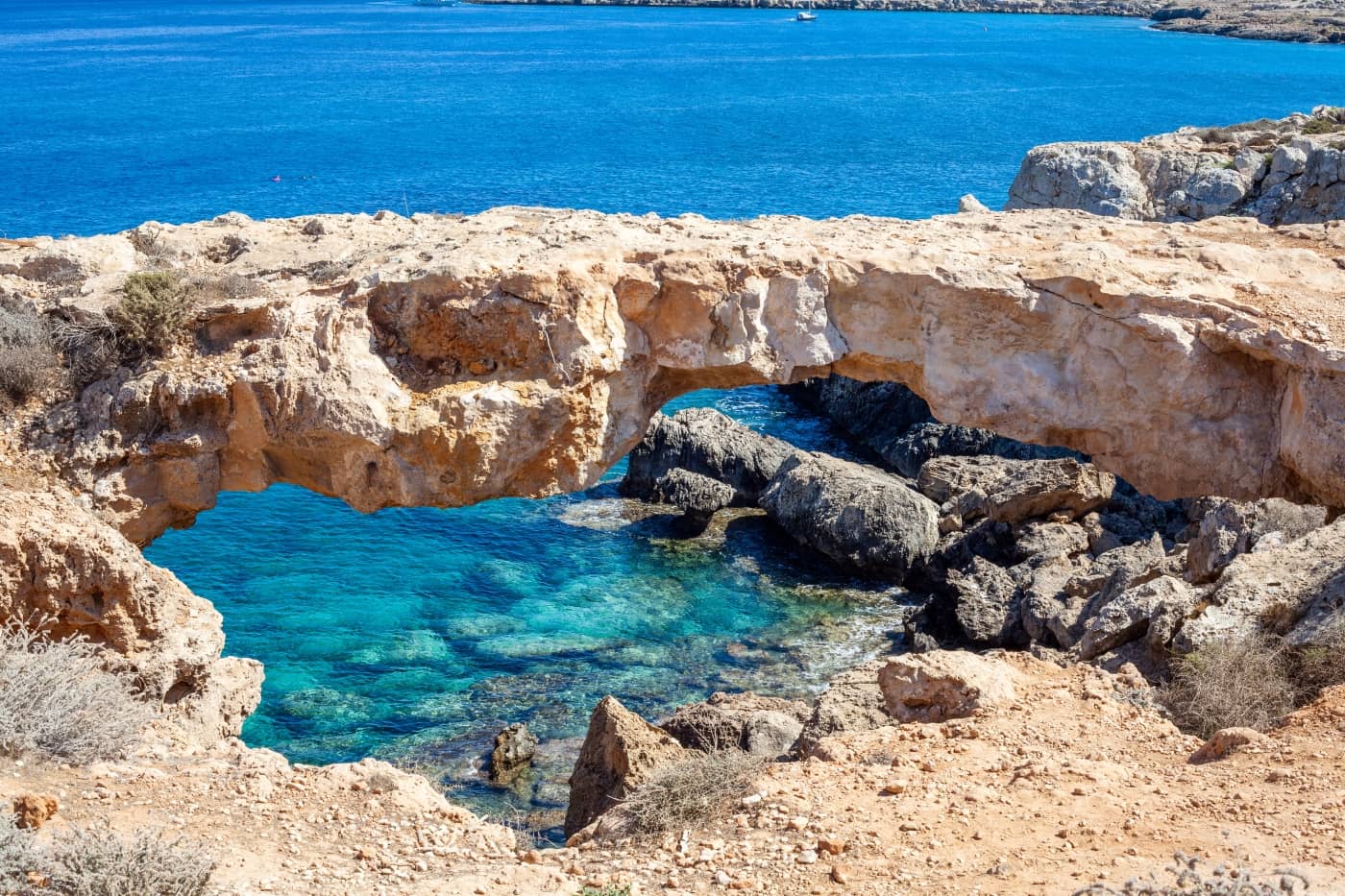
Cyprus is not just an island: it is a crossroads of civilizations, Mediterranean scents and breathtaking landscapes, where history is not confined to museums but lives on in the streets, among Roman mosaics, Byzantine monasteries and ancient legends.
Cyprus is the island of Aphrodite, the Goddess of Love born from the sea foam at Petra tou Romiou, but also a land of medieval castles, hermitages nestled in the forests, white beaches and villages suspended in time.
It is an island that can be experienced in many different ways: relaxing in the sun, exploring unique natural landscapes, hiking along mountain trails or discovering authentic villages where tradition is still alive and can be felt in every breath.
One surprising aspect is that every area of the island tells a different story:
Visiting Cyprus means enjoying many different experiences in a single journey: beaches, historic cities, cool mountains, village festivals and unforgettable sunsets.
Let’s discover together the four souls of the island which, intertwined, bring to life a special place in the heart of the Mediterranean.
If there is one corner of Cyprus capable of stealing your heart at first sight, it is undoubtedly Pafos and the Akamas Peninsula. Here the sea is so clear that it seems unreal, white cliffs plunge into emerald waters and every stone tells an ancient legend. It is a place filled with the scent of Mediterranean scrub, where sunsets turn golden and time moves more slowly, as though it wanted to give you every second to enjoy to the fullest.
Pafos is not just a seaside destination: it is a gateway to the history of Cyprus, and some of the most important archaeological sites in the eastern Mediterranean can be found here. According to mythology, Aphrodite, the Goddess of love and beauty, was born here. And when you find yourself standing in front of Petra tou Romiou, the famous white rock rising from the sea, you will understand why: the scene is so perfect that it looks like a painting.
The island’s west coast is spectacular: small hidden bays, golden beaches and cliffs overlooking a clear, crystal-clear sea. Just a few kilometres away lies the Akamas Peninsula, a protected area of extraordinary natural beauty, where lush vegetation meets cliffs and dreamlike beaches.
On the northern coast of the peninsula, the Baths of Aphrodite also await you, a small natural spring surrounded by fig trees, where according to legend the goddess met her Adonis.
Cyprus is an island that seems to have emerged from an ancient tale: a place where myth and history have intertwined for thousands of years. At the heart of the eastern Mediterranean, for centuries it was a crossroads of Phoenician, Greek, Roman, Byzantine, Venetian and Ottoman civilizations, each of which left an indelible mark.
According to Greek mythology, Cyprus is the birthplace of Aphrodite, goddess of love and beauty, born from the sea foam at Petra tou Romiou, today one of the island’s most iconic beaches. Legend has it that swimming around her rock brings good luck in love. But Cyprus is not only the land of the gods: it is a mosaic of true stories, witnessed by real and perfectly preserved historical sites.
The Pafos mosaics, a UNESCO World Heritage Site, depict Greek heroes and deities with extraordinary precision. The medieval castles of Kolossi and Buffavento tell the story of the Crusader era, filled with intrigue and legends of knights. In the Byzantine monasteries of the Troodos Mountains, meanwhile, sacred icons are still objects of veneration and pilgrimage, and many locals believe in their protective power.
Pafos was an important centre of ancient Hellenistic and Roman Cyprus. Its villas decorated with mosaics depict Greek myths such as those of Theseus and Dionysus.
Every corner of the island is linked to a story: from the white cliffs of the western coast to the mountain trails immersed in silence. Visiting Cyprus means walking through real landscapes and immortal stories, feeling the breath of the Gods and the gentle weight of the centuries.
It is an island that is not simply visited: it is listened to and experienced. A place where myth and reality coexist, offering authentic emotions and timeless charm.
One of the most beautiful things about Pafos and Akamas is the way they combine spectacular natural landscapes with thousands of years of history.
In the heart of Pafos lies the Kato Pafos Archaeological Park, a UNESCO World Heritage Site, with some of the best-preserved Roman mosaics in the Mediterranean. The “Tombs of the Kings”, carved into the rock, will take you back more than 2,000 years, while the medieval Castle by the harbour adds a romantic touch to evening strolls.
Away from the more touristy areas, the inland region is dotted with traditional villages such as Kathikas or Drousia, where time seems to have stood still. Here you can taste local wines directly at the wineries, sit down in a taverna to enjoy meze and let yourself be carried away by the island’s slow pace.
What makes this part of Cyprus special is its atmosphere: it is not an area built around mass tourism, but an authentic place, where nature and tradition coexist in harmony.
Imagine watching the sunset from Petra tou Romiou beach, with your feet in the sand and the sea changing colour minute after minute. Or walking along the thyme-scented trails of the Akamas Peninsula, surrounded only by the sound of cicadas and the wind rustling through the olive trees.
It is no coincidence that many travellers choose Pafos as a base from which to discover the best of Cyprus. It is perfect for those who love nature, culture and the sea, but do not want to give up a peaceful and genuine atmosphere.
Limassol is the most cosmopolitan city in Cyprus: a mix of an elegant seafront, a medieval castle and ancient ruins overlooking the sea. In its surroundings are two of the island’s most important archaeological sites: Kourion and Amathus.
Kourion was one of the major city-states of ancient Cyprus. The Greco-Roman theatre overlooking the sea is one of the most spectacular places on the island. Amathus, according to legend, was associated with the cult of Aphrodite.
There is a corner of the Mediterranean where the sea has Caribbean shades, history has its roots in the Bible and the light is so intense that it seems eternal. Welcome to the south-eastern coast of Cyprus: Larnaka, Ayia Napa and Protaras, three different souls, united by a subtle thread of pale sand, crystal-clear water and stories spanning thousands of years. If you love destinations where sea and culture blend and intertwine, just as we often describe when talking about the Greek islands, here you will discover an authentic Mediterranean East, surprising and still capable of leaving you in awe.
Larnaka, Ayia Napa and Protaras are located in the south-eastern part of Cyprus, along a coastline facing the Levant. Larnaka is the gateway to the island: an elegant city, with an iconic palm-lined seafront (Finikoudes), a compact historic centre and an identity suspended between the West and the Middle East. It is strategically located, halfway between the capital Nicosia and the island’s most famous seaside resorts.
Continuing eastwards, you reach Ayia Napa, once a fishing village, today famous for its spectacular beaches and vibrant energy. It is not just about nightlife: simply travel a few kilometres away to discover sheltered coves and breathtaking rocky landscapes.
Further east, almost on the border with the Famagusta area, lies Protaras, a more peaceful resort, perfect for families and travellers looking for relaxation and crystal-clear waters. Here the coastline opens onto sheltered bays, with shallow waters and fine sand, including the famous Fig Tree Bay.
This area benefits from an excellent climate: long, dry and sunny summers (from May to October the sea is often above 23-24°C), mild winters and intense light throughout the year. The landscape alternates between golden beaches, rocky headlands and Mediterranean scrub scented with thyme and juniper. Providing a spectacular backdrop is Cape Greco, the natural park separating Ayia Napa from Protaras, with sheer cliffs, sea caves and panoramic trails offering spectacular views over the blue sea.
Choosing this coast means experiencing Cyprus in all its variety: turquoise sea in the morning, archaeology in the afternoon, fiery sunsets and seaside tavernas in the evening. A combination that slowly wins you over and stays in your heart.
The easiest way to get there is to fly to Cyprus and land at Larnaca International Airport, the island’s main airport and well connected with many European cities. From the airport, the centre of Larnaka is just 10 minutes away by taxi or bus. Ayia Napa can be reached in around 40-45 minutes by car, while Protaras is just under an hour away.
For those who enjoy travelling independently, renting a car is the ideal solution: the roads are well maintained and the signs are clear (driving is on the left, a legacy of British rule). Having a car allows you to explore less crowded beaches, reach Cape Greco at sunrise and discover small inland villages.
There are also bus connections between Larnaka, Ayia Napa and Protaras, which are affordable and reliable, especially during the high season. For those staying in hotels or resorts, private transfers are often available.
An ideal itinerary? 2-3 nights in Larnaka to soak up its authentic atmosphere, followed by a transfer to Ayia Napa or Protaras for 4-5 days of intense seaside relaxation. This way you can combine culture, spirituality, nature and picture-perfect beaches in a single journey.
The history of Larnaka is among the oldest in the Mediterranean. Ancient Kition, a Phoenician city-state, once stood right here. According to Christian tradition, Lazarus, after being raised from the dead by Jesus, took refuge in Cyprus and became the first bishop of Kition. The majestic Church of Saint Lazarus houses his tomb and is one of the city’s most iconic landmarks.
Over the centuries, the area was ruled by Phoenicians, Assyrians, Egyptians, Persians, Greeks, Romans, Byzantines, Venetians and Ottomans. This layering of civilizations can be felt while walking among the archaeological ruins of Kition, in its religious architecture and in the fortifications overlooking the sea.
Ayia Napa takes its name from a 15th-century Venetian monastery, the Ayia Napa Monastery, built around a sacred cave. For centuries it was a place of pilgrimage; it was only in the 20th century that the area developed into a seaside destination.
Protaras, more recent as a tourist resort, lies close to ancient Leukolla, mentioned by Strabo. Today it retains a simple character, but its history is connected to the complex events that shaped Cyprus in the 20th century, including the division of the island.
Visiting this coast means walking across a land where different civilizations have overlapped, leaving tangible traces behind. Here the sea is not only beautiful: it has been a route for trade, conquest and rebirth.
The headland of Cape Greco is surrounded by legends: stories tell of a mysterious “sea creature” spotted in its waters, a kind of Cypriot mermaid. The sea caves, sculpted by wind and waves, have inspired folk tales and mysterious nocturnal legends.
Fascinating facts:
Here myth and reality blend together: a monastery hidden within Venetian walls, a mosque reflected in a salt lake, caves that seem to have been sculpted by the Gods. Every corner tells a story.
An extra tip? Wake up early, when the light is still soft, and walk along the almost deserted shoreline. At that moment you will understand that this part of Cyprus is not just about spectacular beaches and sea: it is a complete sensory experience.
There are places that reveal themselves slowly. They do not dazzle you with turquoise beaches or seaside venues, but find their way into your heart through the silence of the mountains, the scent of pine trees and the ancient walls of a city that tells centuries of conquest, faith and division. Nicosia and the Troodos Mountains represent the deepest and most authentic soul of Cyprus. Here the Mediterranean takes on a different face: it becomes contemplation, history, spirituality.
Nicosia, the island’s capital, is the only European capital still divided by a demarcation line. But reducing it to this alone would be limiting. It is an elegant, cultured city, with a historic centre enclosed by imposing star-shaped Venetian walls. Walking through cobbled alleyways, hidden courtyards and houses with wooden balconies, you can feel an atmosphere suspended in time: East and West brush against one another, intertwine and coexist.
Just a few kilometres from the city, the landscape changes dramatically. The arid plains give way to the green slopes of the Troodos Mountains, a world of forests, stone villages and Byzantine monasteries decorated with centuries-old frescoes. Here the air is cooler, time seems to slow down, and Cyprus reveals its most spiritual side. It is a land of monasteries perched on mountain slopes, golden icons and legends of emperors, hermits and miracles.
Visiting Nicosia and Troodos means discovering the beating heart of the island: not only its administrative capital, but the centre of its cultural and religious identity. It is a different kind of journey, more introspective, perfect for those who love to intertwine (or rather, blend) nature, art and historical memory. While the south-eastern coast enchants with its sea, the interior captivates with its soul.
Nicosia is located in the centre of the island of Cyprus, on the Mesaoria Plain. It is equidistant from the main coastal cities, but has an identity entirely of its own. The historic centre is enclosed by 16th-century Venetian walls, perfectly preserved and still one of the city’s most iconic symbols.
The Troodos Mountains extend across the central-western part of the island and form the most important mountain range in Cyprus. Here you will also find the island’s highest peak, Mount Olympus (Chionistra), which rises to over 1,900 metres. In winter, incredibly, you can even ski here.
This mountainous region is dotted with small traditional villages such as Kakopetria, Omodos and Platres and monasteries declared UNESCO World Heritage Sites for their Byzantine frescoes. The distance between Nicosia and the Troodos Mountains is short: in around an hour by car, you can leave the bustle of the city behind and find yourself surrounded by the silence of the forests.
The main point of arrival remains Larnaca International Airport. From there, Nicosia can be reached in around 40-50 minutes by car or bus.
To explore the Troodos Mountains, renting a car is highly recommended. The roads are scenic and well maintained, but having the freedom to travel independently is essential if you want to visit isolated monasteries and less touristy villages.
It is possible to organise day trips from Nicosia to Troodos, but ideally you should spend at least one night in the mountains, to experience the evening atmosphere of the villages and the profound silence of the forests.
Nicosia, known in ancient times as Ledra, has origins dating back to the Bronze Age. During the Byzantine period it became an important centre, but it was under the Lusignans (a medieval French dynasty) that the city developed as the capital of the Kingdom of Cyprus.
In the 16th century, the Venetians built the famous defensive walls, which are still perfectly visible today. The Ottomans arrived later, converting many churches into mosques and leaving an architectural legacy that remains clearly visible to this day.
In 1960 Cyprus gained independence from the United Kingdom, but tensions between the Greek Cypriot and Turkish Cypriot communities led to the division of the island in 1974. Nicosia thus became a city divided by the so-called “Green Line”, which can still be crossed today at specific points such as Ledra Street.
The Troodos Mountains, on the other hand, were a spiritual and cultural refuge for centuries. During invasions, monks and worshippers retreated into these mountains, building monasteries and frescoed churches that still preserve treasures of Byzantine art today.
According to tradition, many of the icons found in the Troodos Mountains were painted by Saint Luke the Evangelist. The most famous monastery, Kykkos Monastery, houses an icon of the Virgin believed to be miraculous and associated with a legend involving a Byzantine governor and a hermit.
It is said that the emperor sent precious gifts and ordered the monastery to be built after a miraculous event healed his daughter. Even today, Kykkos is a pilgrimage destination and one of the most revered places in Cyprus.
Another legend tells that the Troodos Mountains were the place from which the Greek Gods watched over the Mediterranean from above, and that the forests are home to ancient spirits connected to nature.
Nicosia itself is surrounded by folk tales: secret passages beneath the Venetian walls, hidden treasures and stories connected to the division of the island that still shape its collective memory today.
A journey through Nicosia and Troodos is not just about tourism. It is an immersion into the most authentic side of Cyprus, one that tells stories of faith, resilience and identity. Here the sea may be far away, but the emotions run deep. And when you make your way back down towards the coast, you will carry with you the feeling that you have discovered the true heart of the island.
Cyprus is an island where history and nature coexist in perfect harmony. It is turquoise sea and green mountains, ancient mosaics and hidden monasteries, authentic tavernas and unforgettable sunsets.
A journey that brings together myth, culture and pure Mediterranean landscapes.
An island to experience slowly, allowing yourself to be embraced by its beauty.




Pianifica la tua vacanza nelle isole greche
Niente pacchetti standard. Contattaci per un itinerario su misura che cattura l'anima delle isole.
Massimo 2 preventivi gratuiti
Dalle acque cristalline di Mykonos ai tramonti mozzafiato di Oia, il nostro team di esperti locali è pronto a curare ogni dettaglio della tua fuga greca. Non siamo solo un'agenzia — siamo il tuo ponte verso l'Egeo.
Risposta immediata garantita