WhatsApp Contattaci su WhatsApp
iten +39 333 85 99121 info@meraviglioseisolegreche.com
+39 333 85 99121 info@meraviglioseisolegreche.com
iten
Home > Attività Isole > Crete – a complete guide to where to stay, what to see, how to get there, and the beaches.

Crete – a complete guide to where to stay, what to see, how to get there, and the beaches.

The magic of Crete: a perfect mix of nature, history and human warmth

Crete is not just a destination: it is a sensory experience.
It is the intense blue of the sea blending into the sky, the scent of freshly pressed olive oil, the song of the wind through the gorges and the genuine smile of the local people.

It is an island that is meant to be experienced slowly without rushing, it welcomes you like an old friend and invites you to sit in a seaside taverna, with a small glass of raki and a plate of mezedes (Greek appetisers), while watching the sun set.

One fascinating aspect of Crete is that the island is divided into four main regions, each with its own identity, atmosphere and unique characteristics.

If you visit them all, you will feel as though you have explored four different islands in a single holiday.

Let’s discover these four very different yet closely connected areas that together create a wonderful land filled with everything you could possibly need.

CHANIA (insert map)

Chania, the western pearl of Crete, is a little world of its own, where sea and mountains meet and embrace, creating breathtaking landscapes. It is a region stretching from the coast to the White Mountains (Lefka Ori), a mountain range that dominates the hinterland with more than 50 peaks rising above 2,000 metres.

Along the coast, golden sandy beaches alternate with hidden bays, fishing villages and romantic little harbours. Inland, instead, you will find endless olive groves, deep gorges and authentic villages where time moves slowly. The atmosphere of this part of Crete is an irresistible mix of wild nature, culture, hospitality and authenticity.

The city of Chania, the capital of the region, is a small architectural gem. Its Venetian harbour, with its famous lighthouse, is one of the most photographed places on the island. Walking through its cobbled alleys, among pastel-coloured buildings and the scent of the sea, feels like stepping into a Mediterranean postcard.

Historical background, myths and legends

The history of Chania is long and fascinating. The area was already inhabited during the Neolithic period, but it was with the Minoan civilisation (from 2700 BC) that it became an important centre. Ancient Kydonia, which stood where Chania is located today, was one of the most powerful cities in Crete.

Over the centuries, the region was ruled by several powers: Romans, Byzantines, Venetians and Ottomans. Each one left traces that are still clearly visible today in the city’s architecture and atmosphere. The Venetian harbour, the lighthouse, the Ottoman mosques, the Neoclassical buildings: everything tells the story of a rich past shaped by encounters and cultural influences.

Mythological curiosity: according to some local legends, the Chania area was once inhabited by sea nymphs and protective water spirits. Fishermen used to tell stories of hearing songs coming from the lighthouse at night, believed to protect the city from storms.

How to get there ✈️⛴️

Chania is easily accessible both by air and by sea.

  • Plane: Chania International Airport “Ioannis Daskalogiannis” (CHQ) is located approximately 14 km from the city centre. It is connected by direct flights from many Italian cities (especially during the summer) and from Athens all year round.
  • Ferry: overnight ferries depart from the port of Piraeus (Athens) directly to Souda, the main port of the Chania region, located approximately 6 km from the city.

From the airport or the port, you can easily reach the centre by bus, taxi or rental car. If you love freedom, renting a car is the best choice for exploring the entire region.

Getting around

The best way to truly experience Chania and its surroundings is to travel independently. Distances are not huge, but many of the most beautiful places are located away from the classic tourist routes.

  • Rental car: ideal for exploring remote beaches, mountain villages and scenic routes.
  • Scooter / Quad: perfect for couples or small groups travelling around areas close to the city.
  • Public buses (KTEL): connect the city of Chania with other important destinations such as Kissamos, Paleochora and Elafonissi. They are convenient but have limited schedules.
  • Taxis and private transfers: more expensive but convenient, especially for day trips.

Tip: if you can, organise a road trip itinerary. It will allow you to discover hidden bays and authentic villages that you would never find using public transport.

Where to stay

Chania is one of the most popular areas of Crete because it can adapt to every type of holiday: sea, relaxation, history, nature, culture, gastronomy and laid-back entertainment.
But choosing the right area to stay really makes all the difference when it comes to enjoying the experience to the fullest.

  • Families with children: for those travelling with little ones, the priority is having safe beaches and convenient services. Here are the most suitable areas: Agii Apostoli, Nea Chora. Platanias (for active families)
  • Young travellers / groups of friends: Chania Old Town, Platanias, Agia Marina
  • Couples: Old Town and Venetian harbour, Kissamos, Agii Apostoli, Agia Marina
  • Groups of middle-aged friends: Daratsos Galatas, Kissamos, Platanias, Agia Marina.
  • Senior travellers: Nea Chora, Agii Apostolis, Kalamaki

What you absolutely must see in Chania:

North Coast from Chania to Kissamos

  • Venetian harbour and Ottoman lighthouse
  • Mosque of the Janissaries
  • Topanas district (picturesque alleys and Venetian houses)
  • Covered Market (Agora)
  • Kastelli Hill (Minoan and Venetian remains)
  • Archaeological Museum of Chania
  • Venizelos Tombs (panoramic views and spectacular sunsets)
  • Beaches and bays
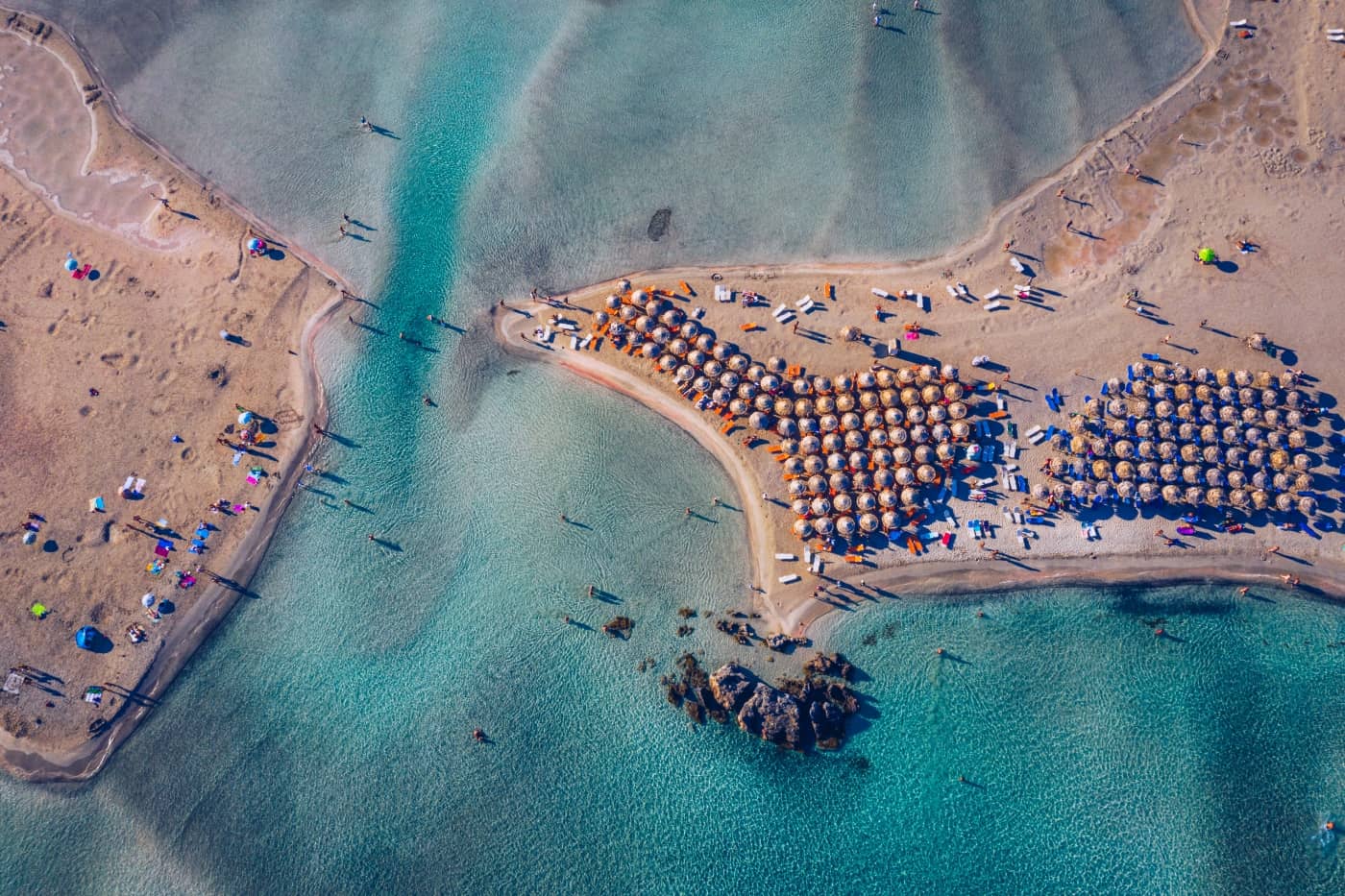
    • Balos Lagoon – white and pink sand, turquoise sea, accessible by trail or boat
    • Falasarna – wide golden beach, unforgettable sunsets
    • Afrata Beach – small, peaceful and sheltered bay
    • Kolymbari Beach – less crowded, ideal for relaxation
    • Korfalonas Beach – long and peaceful
  • Cultural and historical sites
    • Gonia Monastery (Kolymbari) – Venetian architecture and sea views
    • Gramvousa Fortress – spectacular views over the island and Balos
    • Ancient city of Polirinia – historical ruins and panoramic views

South coast from Elafonissi to Agia Roumeli

  • Famous beaches
    • Elafonissi Beach – pink sand, shallow and crystal-clear lagoon
    • Kedrodasos – natural beach surrounded by juniper trees
    • Sougia – peaceful, perfect for those looking for relaxation
    • Agia Roumeli – accessible by sea or after hiking through the Samaria Gorge
    • Lissos – beach with archaeological remains surrounded by nature
    • Paleochora – seaside village with sandy and pebbly beaches
  • Cultural and scenic attractions
    • Chrysoskalitissa Monastery – breathtaking views and the legend of the “golden step”
    • Small islands and hidden coves along the south-western coast
    • Small traditional seaside villages with typical tavernas

⛰️ Hinterland and Mountains (Lefka Ori and surroundings)

  • Samaria Gorge – the most famous in Europe, 16 km of spectacular trekking
  • Imbros Gorge – a shorter but scenic alternative
  • Aradena Gorge – wild, with a suspension bridge and impressive landscapes
  • Topolia Gorge – spectacular and impressive scenic road
  • Agia Irini Gorge – ideal for those who enjoy peaceful walks
  • Omalos Plateau – starting point for excursions into the White Mountains
  • Theriso – historic village linked to Cretan independence
  • Vamos – stone houses and rural atmosphere
  • Gavalohori – tradition and local craftsmanship
  • Anopolis – spectacular views over the Libyan Sea
  • Milia – eco-village surrounded by nature
  • Lakki and Karanou – typical mountain villages
  • Small Byzantine monasteries scattered throughout the hinterland
  • Rock-cut churches and medieval frescoes
  • E4 trails for trekking between mountains and sea

Experiences and curiosities

  • Tastings of extra virgin olive oil, local wines, raki and honey
  • Traditional tavernas in the villages and along the coast
  • Spectacular sunsets on the west coast (especially Falasarna and Balos)
  • Boat trips to small islands and hidden beaches
  • Local markets selling handmade crafts and gastronomic products
  • Horse riding excursions and scenic routes through the White Mountains
  • Take a swim at sunrise at Elafonissi
  • Taste fresh fish in a taverna by the harbour
  • Rent a car and lose yourself among the inland villages
  • Go trekking in the Samaria Gorge
  • Drink raki with the locals
  • Take part in a village festival
  • Go snorkelling at Balos

Cuisine and typical dishes of the Chania area

Chania’s cuisine is a celebration of Mediterranean flavours. Many restaurants are family-run and serve recipes handed down through generations. Make sure you try these before leaving:

  • Dakos: barley bread with tomato and feta
  • Kalitsounia: small sweet or savoury pastries filled with local cheese
  • Staka: a creamy butter and cheese speciality typical of western Crete
  • Lamb kleftiko: lamb slowly cooked with aromatic herbs
  • Raki or tsikoudia: the local spirit, always served with a smile

Events and festivals in Chania

  • Dafnes Wine Festival (July) to taste local wines and traditional products.
  • Agios Ioannis Festival (June) traditional bonfires and folk dancing.
  • Raki Festival (autumn) public distillation and free tastings.
  • Cretan music concerts and dances in the villages throughout the year.

Practical tips for a holiday in the Chania area

  • Best time to visit: May–October. July and August are hot and crowded, but the atmosphere is lively.
  • Climate: dry and sunny. Bring a hat and plenty of sunscreen.
  • Money: cards are accepted almost everywhere, but it is useful to carry cash for tavernas and small shops.
  • Language: English is spoken almost everywhere; locals appreciate it if you learn a couple of words in Greek.
  • Clothing: casual and lightweight, but bring comfortable shoes if you want to explore the hinterland.

In summary: Chania is sea and mountains, history and nature, romance and adventure. It is the part of Crete that wins everyone over, from curious travellers to couples, from families to solo explorers.

RETHYMNO

Rethymno is the elegant and authentic soul of Crete. Located in the heart of the island, this region is a perfect balance between sea and mountains, between historical charm and the relaxed pace of Mediterranean life.

It stretches from the northern coast washed by the Aegean Sea, with long sandy beaches, to the Psiloritis Mountains (or Mount Ida), the highest peak in Crete, majestically dominating the hinterland at over 2,400 metres.

Rethymno is a land that tells ancient stories and enchants with its beautiful landscapes: natural bays, traditional villages, spectacular gorges and one of the most fascinating historic centres in Greece. Walking through its narrow streets is a unique experience: Venetian houses, wooden doorways, flower-filled balconies and tavernas where you can breathe in authentic Cretan life. The atmosphere is more intimate and less chaotic than in Heraklion and Chania, yet deeply captivating.

The city of Rethymno, the capital of the region, is considered one of the most beautiful on the island.
Its Venetian harbour, with its 17th-century lighthouse, historic fortifications, Ottoman mosques and lively little squares create the perfect combination of history, culture and sea.

Historical background, myths and legends

The Rethymno area boasts a history spanning thousands of years. Already inhabited during the Minoan era, it was an important trading hub thanks to its central location. During the Venetian period (from the 13th to the 17th century), the city became one of Crete’s main cultural centres. It was during this period that the Venetian Fortezza, the symbol of the city, was built.

Later, during the Ottoman period, Rethymno became a crossroads of cultures: mosques, fountains and Turkish baths appeared alongside Venetian palaces, creating the multicultural atmosphere that can still be felt today.

Mythological curiosity: according to legend, Mount Ida, which dominates the region, was the place where Zeus was born. Here you will find the Ideon Antron Cave, which according to mythology was the secret refuge of the infant god, protected by his mother Rhea.

✈️⛴️How to get there

Rethymno does not have its own airport, but it is easily accessible thanks to its central position between Chania and Heraklion.

  • Plane:
    • Chania Airport (CHQ) → approximately 70 km
    • Heraklion Airport (HER) → approximately 80 km
      Both are connected by seasonal direct flights from the main Italian cities and by flights from Athens throughout the year.
  • Ferry:
    • Port of Piraeus (Athens) → Heraklion or Souda (Chania), then continue by bus, taxi or rental car.
  • Transfer:
    • From the airport you can reach Rethymno by public bus, taxi, private transfer or rental car.

Tip: renting a car is the ideal solution if you want to explore the surrounding area independently.

Getting around

The best way to truly experience Rethymno is to move around freely.
The coastal roads are scenic, while the hinterland is filled with authentic villages and wonderful natural attractions.

  • Rental car: ideal for reaching hidden beaches and taking day trips.
  • Scooter / Quad: perfect for travelling along the coast or around the city.
  • Buses : connect Rethymno with Chania and Heraklion, as well as destinations such as Plakias and Bali.
  • Taxis and private transfers: a convenient but more expensive option for short journeys or excursions.

Rethymno is also easy to explore on foot: the historic centre is compact and lively, ideal for long walks.

Where to stay in Rethymno

Rethymno is a very popular destination because it offers a range of accommodation perfect for every type of traveller: from families to couples, from groups of friends to senior travellers.
Choosing the right area can completely change your travel experience.

  • Families with children Rethymno Beach (East): long, sandy and perfect for children. Here you will find many resorts and aparthotels with mini clubs and swimming pools.
  • Adelianos Kampos: peaceful tourist area, well connected and ideal for active families.
  • Platanes: seaside resort close to the city, with organised beaches and family-friendly services. Types of accommodation: beachfront resorts, aparthotels, family apartments, B&Bs.
  • Young travellers / groups of friends Rethymno Old Town: perfect for those looking for restaurants, bars and laid-back nightlife., Rethymno outskirts (towards Platanes): easy access to the beach and more affordable prices. Bali (20 min by car): young and lively seaside resort. Types of accommodation: boutique hotels, modern B&Bs, shared apartments, beachfront hotels.
  • Couples: Old Town and Venetian harbour Panormos: picturesque coastal village, perfect for those seeking intimacy and relaxation, Bali Beach: small peaceful bay, ideal for romantic getaways. Types of accommodation: romantic boutique hotels, sea-view suites, villas with private pools
  • Groups of middle-aged friends Adelianos Kampos and Eastern Outskirts: excellent location for travelling by car and exploring the region. Panormos: perfect for groups who want to combine the sea, good food and quiet evenings. Hinterland (traditional villages): for those seeking authenticity and plenty of space. Types of accommodation: villas with private pools, large holiday homes, hotels with connecting rooms.
  • Senior travellers Rethymno city centre and seafront: flat, with the beach close at hand and services nearby. Panormos: peaceful and easy to explore on foot. Platanes: well-organised tourist area with accessible accommodation. Types of accommodation: 3–4 star hotels with in-house restaurants, quiet B&Bs, accessible resorts.

What you absolutely must see in Rethymno

North coast from Panormos to Bali and Rethymno city

  • Venetian Fortezza Rethymno city (Fortezza) – views over the city and sea, perfectly preserved walls and bastions
  • Venetian harbour and Ottoman lighthouse Rethymno city– one of the city’s most iconic places
  • Venetian-Ottoman Old Town Rethymno city – narrow streets, arches, flower-filled balconies, loggias and fountains
  • Neratzes Mosque Rethymno city – now a concert hall, with a spectacular dome
  • Venetian Loggia Rethymno city – testimony to the city’s colonial past
  • Rimondi Fountain Rethymno city – elegant Baroque fountain in the heart of the city
  • Archaeological Museum of Rethymno Rethymno city– Minoan and Venetian artefacts
  • Historical and Folklore Museum Rethymno city – traditional Cretan life
  • Beaches of the north coast
    • Rethymno Beach – long sandy beach in front of the city, perfect for walks
    • Perivolia and Adelianos Kampos – seaside areas with organised beaches and restaurants
    • Panormos Beach – picturesque coastal village, calm and transparent waters
    • Bali – small resort with four sheltered bays and turquoise sea
    • Stavromenos Beach – quieter, ideal for relaxation
  • Historical and cultural attractions nearby
    • Arkadi Monastery – one of the most important monuments in Crete, symbol of Cretan resistance
    • Arsaniou Monastery – with a museum and panoramic views
    • Agia Irini Monastery – Byzantine frescoes and a peaceful atmosphere
    • Margarites Village – famous for traditional pottery and artisan workshops
    • Eleftherna – archaeological site with ancient remains and a modern museum
    • Zoniana Cave (Sfendoni) – spectacular cave with stalactites and stalagmites

South coast from Plakias to Agia Galini

  • Famous beaches and bays
    • Plakias Beach – long sandy beach with transparent sea
    • Damnoni Beach – crystal-clear sea and pale sand, ideal for swimming
    • Ammoudi and Ammoudaki – small hidden coves with turquoise waters
    • Skinaria Beach – clear waters, popular with snorkelling enthusiasts
    • Preveli Beach – famous for its lagoon and palm forest, where the river flows into the sea
    • Agios Pavlos – beautiful beach with sand dunes and deep waters
    • Triopetra – famous for its three large rocks, wide and wild beach
    • Agia Galini – picturesque seaside village with a harbour, tavernas and relaxed atmosphere
  • Natural and scenic attractions
    • Preveli Monastery – overlooking the south coast, with spectacular views
    • Kourtaliotiko River and Gorge – breathtaking scenery with natural waterfalls
    • Kotsifou Gorge – crossed by a narrow and dramatic scenic road
    • Preveli Palm Forest – a unique natural tropical oasis in Europe
    • Cape Melissa and Cape Triopetra – unspoilt landscapes and incredible sunsets
  • Picturesque coastal villages
    • Plakias – ideal base for exploring the south coast
    • Agia Galini – whitewashed village with narrow streets and restaurants overlooking the sea
    • Myrthios – panoramic views over Plakias, excellent traditional tavernas
    • Lefkogia – peaceful village close to gorges and beaches
    • Kerames – authentic and little-visited, with views of the mountains and sea

⛰️ Hinterland and mountains central area

  • Gorges and nature
    • Kourtaliotiko Gorge – imposing and spectacular, with panoramic viewpoints
    • Kotsifou Gorge – narrow and dramatic, easily accessible
    • Mount Psiloritis (Ida) – the highest mountain in Crete (2,456 m), trekking and panoramic views
    • E4 Trails – cross the region from north to south for hiking
    • Amari Valley – authentic rural landscape surrounded by mountains
  • Traditional villages ?
    • Spili – famous for its Venetian fountain with 25 lion heads and excellent local cuisine
    • Amari – village surrounded by greenery, perfect for those seeking authenticity
    • Ano Meros – scenic and peaceful, an excellent starting point for excursions
    • Zaros – for excursions towards Mount Ida
    • Atsipades, Gerakari and Meronas – small villages with a strong Cretan identity
  • Historical and spiritual sites
    • Arkadi Monastery – part of Crete’s historical heritage, a symbol of freedom surrounded by hills and olive groves.
    • Byzantine churches of Amari – well-preserved medieval frescoes
    • Eleftherna Museum – Minoan and Classical archaeological artefacts
    • Old stone houses and traditional mills in several villages

Experiences and curiosities

  • Tastings of extra virgin olive oil, local cheeses, honey and Cretan wine
  • Boat trips from Plakias and Agia Galini to secluded beaches
  • Walks among centuries-old olive groves and the vineyards of Amari
  • Trekking through mountains and gorges along scenic routes
  • Artisan markets in the villages (ceramics, textiles, local products)
  • Spectacular sunsets on the south-west coast (Triopetra and Agios Pavlos)
  • Mount Psiloritis – for excursions and spectacular views.
  • Ideon Antron Cave – legendary birthplace of Zeus.
  • Panormos and Bali – picturesque seaside villages.
  • Patsos Gorge – ideal for excursions and unspoilt nature.

✅ Things you absolutely must do in Rethymno

  • Walk along the Venetian harbour at sunset
  • Take a morning swim at the city beach
  • Visit the Fortezza at sunset for breathtaking views
  • Take an excursion to Arkadi Monastery
  • Taste raki and traditional dishes in a local taverna
  • Rent a car and explore Panormos, Bali and the inland villages
  • Go trekking in Patsos Gorge
  • Discover the Ideon Antron Cave
  • Visit local markets to buy honey, olive oil and Cretan spices

Cuisine and typical dishes of the Rethymno area

Rethymno’s cuisine is authentic, simple and genuine, just like its people.
Tavernas are often family-run and serve dishes handed down through generations. Many tavernas also offer evenings with live traditional music. Not to be missed:

  • Lamb with stamnagathi – lamb with wild chicory
  • Olives and local cheeses – often served as an appetiser
  • Antikristo – lamb slowly cooked around an open fire
  • Raki – local spirit, a symbol of Cretan hospitality.

Events and festivals in Rethymno

  • Rethymno Wine Festival (July) – one of the most famous in Crete, with wine tastings and traditional music.
  • Rethymno Carnival (February) – second only to the Carnival of Patras, it is a colourful and lively celebration.
  • Arkadi Festival (November) – a historical and religious celebration of great importance to the Cretan people.
  • Rethymno Summer Festival – cultural events, concerts and open-air theatre at the Venetian Fortezza.
  • Festivals in traditional villages – celebrations dedicated to honey, olive oil and local products during the summer.

Practical tips for a holiday in Rethymno

  • Best time to visit: from May to October. July and August are hotter and more crowded, but the atmosphere is very lively.
  • Climate: Mediterranean, hot and dry. Bring a hat, sunscreen and lightweight clothing.
  • Money: cards are accepted almost everywhere, but it is better to carry cash in the villages.
  • Language: English is spoken by almost everyone, but a couple of words in Greek will always be appreciated.
  • Clothing: comfortable and practical, with suitable shoes for exploring the hinterland.

Rethymno is history and nature, sea and mountains, romance and authenticity. It is an area that fascinates couples, families and travellers of all ages with its relaxed pace, golden sunsets, genuine flavours and unique architectural charm.

It is the ideal destination for those who want to experience Crete authentically, away from excessive tourism but close to everything that makes the island unforgettable.

HERAKLION

Heraklion, the gateway to Crete and the beating heart of the island. Located on the north coast, Heraklion (in Greek Iraklio) is the largest and liveliest region on the island, where thousands of years of history, crystal-clear sea and modern life blend perfectly together.

This is where the island’s main airport is located, but Heraklion is much more than just an arrival point: it is a surprising region, rich in legendary archaeological sites, spectacular landscapes, lively towns and authentic villages.

From the turquoise sea along the coast to the Psiloritis Mountains, from sandy beaches to olive groves covering the inland hills, Heraklion is a mosaic of experiences.
This is the land of King Minos and the myth of the Minotaur, but also of seaside tavernas, golden sunsets and Cretan hospitality.

The city of Heraklion, the capital of the region, is the largest in Crete and the fourth largest in Greece. Despite its size, it retains an authentic and lively soul: here local life blends with that of travellers from all over the world.

Historical background, myths and legends

The history of Heraklion is deeply connected to the Minoan civilisation, the oldest in Europe.
It is here that you will find Knossos, the legendary capital of King Minos, dating back more than 4,000 years. This is the setting of the myth of the Labyrinth and the Minotaur, one of the most fascinating stories in Greek mythology.

Over the centuries, the region was contested and influenced by many civilisations:

  • the Minoans, who created a flourishing empire,
  • the Venetians, who transformed the city into an important fortified port,
  • the Ottomans, who left behind mosques and hammams,
  • the modern era, which brought development and vitality.

Mythological curiosity: according to legend, Daedalus’ labyrinth was located right here in Knossos, and it was here that Theseus killed the Minotaur with the help of Ariadne.

✈️⛴️How to get there

Heraklion is the main gateway to Crete, so getting there is extremely easy:

Plane:

  • “Nikos Kazantzakis” International Airport (HER) → located just 5 km from the city centre.
  • Direct connections with many Italian cities during the summer season and with Athens throughout the year.
  • Ferry:
    • Daily connections between the port of Piraeus (Athens) and the port of Heraklion.
    • Convenient overnight crossings for those who want to save the cost of a night in a hotel..
    • From the airport or port, the centre can be reached by taxi, bus or rental car.

Tip: if you want to explore the region beyond the city, renting a car is the ideal solution.

Getting around

Heraklion is a strategic and well-connected area, perfect for those who want to explore Crete independently. If you plan to visit several areas of the island, Heraklion is an excellent logistical base.

  • Rental car → the best choice for visiting archaeological sites, beaches and villages.
  • Scooter / Quad → ideal for getting around the outskirts of the city and seaside resorts.
  • Public buses (KTEL) → connect Heraklion with Rethymno, Chania, Agios Nikolaos and the main beaches.
  • Taxis and private transfers → convenient for day trips and short journeys.
  • On foot → the historic centre is compact and easy to explore.

Where to stay in Heraklion

The Heraklion area is extremely versatile: there are modern hotels in the city, resorts along the coast, traditional villages in the hinterland, boutique and romantic hotels.
Here are the best areas to stay according to the type of traveller.

  • Families with children :Amoudara, Kokkini Hani Gouves. Recommended accommodation: beachfront resorts, aparthotels, 3–4 star hotels with mini clubs and swimming pools
  • Young travellers / groups of friends Heraklion city centre for those who love city life, bars, restaurants and museums. Amoudara perfect for those who want the sea during the day and nightlife in the evening. Hersonissos about 25 minutes from the city, is the liveliest resort in all of Crete, with clubs, beach bars and music until late. Recommended accommodation: guesthouses, B&Bs, budget hotels, shared apartments.
  • Couples Heraklion Old Town romantic at sunset, with plenty of elegant restaurants and boutique hotels. Agia Pelagia enchanting bay 20 minutes from the city, ideal for a romantic getaway, Archanes small traditional inland village, perfect for couples who love relaxation and culture. Recommended accommodation: boutique hotels, sea-view suites, charming B&Bs, private villas.
  • Groups of middle-aged friends Amoudara practical for getting around and enjoying the sea without giving up proximity to the city. Archanes excellent base for day trips between the sea, villages and archaeological sites. Hersonissos perfect for dynamic groups who enjoy combining culture and entertainment. Recommended accommodation: holiday homes, villas with pools, hotels with connecting rooms.
  • Senior travellers Agia Pelagia flat, peaceful and well organised. Kokkini Hani shallow sea, nearby services, relaxed atmosphere. Amoudara close to the city, ideal for walks along the seafront. Recommended accommodation: 3–4 star hotels with in-house restaurants, accessible resorts, quiet B&Bs.

What you absolutely must see in Heraklion

North coast from Fodele to Malia and Heraklion city

  • Heraklion City (Iraklio)
    • Heraklion Archaeological Museum – one of the most important in Europe, with unique Minoan artefacts (including the Phaistos Disc and the iconic Prince of the Lilies fresco)
    • Koules Fortress – imposing Venetian structure overlooking the harbour
    • Venetian harbour and arsenals – evidence of the city’s maritime past
    • Historic centre – Lions Square (Morosini Fountain), Venetian Loggia, Agios Titos Cathedral and Central Market
    • Historical Museum of Crete – Byzantine, Venetian and modern collections
    • Church of Agios Minas – one of the largest in Greece
    • Venetian Walls and Martinengo Bastion – panoramic views over the city
    • Cathedral of Saint Titus – important Orthodox place of worship.
  • Archaeological and historical sites nearby
    • Palace of Knossos – the Minoan capital, the most famous archaeological site on the island
    • Palace of Malia – second in importance only to Knossos
    • Amnisos – ancient Minoan port city
    • Tylissos – less crowded but fascinating Minoan site
  • Beaches and bays of the north coast
    • Ammoudara – long sandy beach close to the city, with organised facilities and water sports
    • Agia Pelagia – enchanting and sheltered bay, ideal for swimming
    • Lygaria – small picturesque beach with transparent waters
    • Fodele Beach – peaceful, surrounded by greenery
    • Kokkini Hani – relaxed sandy beach
    • Gouves – suitable for families and couples, with seaside tavernas
    • Hersonissos – lively resort with nightlife and organised beaches
    • Malia Beach – fine sand and shallow sea, very popular
  • Other interesting places
    • Village of Fodele – birthplace of El Greco, the celebrated late-Renaissance painter of Cretan origin, with a museum dedicated to him and lush vegetation
    • Village of Archanes – picturesque, with traditional architecture and local wine
    • Village of Krousonas – authentic, with views of the Psiloritis Mountains

South coast from Agia Galini to Tsoutsouros

The southern coast of the Heraklion region is less developed for tourism and retains an authentic, wild charm.

  • Famous and hidden beaches and bays ?
    • Matala Beach – famous for its rock caves, once a refuge for hippies in the 1960s
    • Kalamaki – golden sand and spectacular sunsets
    • Kommos Beach – archaeological site with a peaceful natural beach
    • Lentas – isolated village with quiet beaches and turquoise sea
    • Tsoutsouros – authentic and uncrowded beach
    • Agiofarago Beach – hidden beach reached through a spectacular gorge
    • Tripiti Beach – remote and scenic, accessible by car or trekking
  • Natural and scenic attractions
    • Agiofarago Gorge – one of the most impressive gorges in Crete
    • Cape Lentas – rocky landscapes and clear sea
    • Kali Limenes hills and cliffs – breathtaking views
    • Martsalo Gorge – remote, with palm trees and rock-cut caves
  • Picturesque coastal villages
    • Matala – famous for its bohemian spirit and relaxed atmosphere
    • Lentas – authentic, far from mass tourism
    • Kalamaki and Kommos – ideal for those seeking peace and nature
    • Tsoutsouros – small fishing village
    • Agios Kyrillos – for those who love truly isolated places

Hinterland and mountains Psiloritis, Messara and rural areas

  • Gorges and nature
    • Rouvas Gorge – in the heart of Mount Ida, one of the most beautiful hikes on the island
    • Zeus Cave (Ideon Antron) – mythical birthplace of Zeus, on Mount Ida
    • Rouvas Natural Park – forests, springs and spectacular views
    • Livadi Plateau – pastures and traditional villages
    • Psiloritis Mountains (Ida) – Crete’s highest peak, with challenging trekking and magnificent views
  • Traditional villages
    • Archanes – one of the most beautiful villages in Crete, known for its wines and architecture
    • Asites – traditional village with mountain views
    • Krousonas – authentic and scenic
    • Venerato – with a Byzantine monastery
    • Zaros (on the border with Rethymno) – ideal for excursions into Rouvas Gorge
    • Ano Asites, Vlaherna, Siva – small rural villages that remain very authentic
  • Historical and cultural sites
    • Palace of Phaistos (Festos) – second in importance only to Knossos, with spectacular views over the Messara Plain
    • Gortyna – Roman archaeological site with impressive remains (theatre, basilica, Gortyn Code)
    • Agia Triada – Minoan villa in a panoramic location
    • Vrondisi Monastery – one of the oldest in Crete
    • Agios Nikolaos Monastery (Archanes) – important Byzantine heritage site

EXPERIENCES AND CURIOSITIES

  • Tastings of local wines, extra virgin olive oil, raki, honey and cheeses in rural villages
  • Trekking through gorges and walks in inland villages
  • Boat trips from Matala to bays and sea caves
  • Combined archaeological tours: Knossos + Phaistos + Gortyna
  • Scenic itineraries on Mount Ida (Psiloritis)
  • Local markets and artisan workshops (ceramics, olive oil, traditional products)
  • Spectacular sunsets at Matala and Kommos ?
  • Villages of Archanes and Vathypetro – authentic and rich in history.
  • Mount Juktas– ideal for walks and trekking with spectacular views.

Things you absolutely must do in Heraklion

In the inland villages, many tavernas still cook in wood-fired ovens and use 100% local ingredients.

  • Visit the Palace of Knossos early in the morning to avoid the crowds
  • Walk along the Venetian harbour at sunset
  • Discover the treasures of the Archaeological Museum
  • Enjoy fresh fish in a taverna overlooking the sea
  • Rent a car and visit Agia Pelagia and the inland villages
  • Taste local wines in the wineries of Archanes
  • Go snorkelling in the bays around Kokkini Hani
  • Visit the central market and take home olive oil, honey or Cretan spices

Cuisine and typical dishes of the Heraklion area

Heraklion’s cuisine is a journey through Minoan tradition and Mediterranean flavours.
Here, gastronomy is simple, genuine and closely connected to the land.

  • Grilled octopus – served by the sea with ouzo or raki
  • Horiatiki – authentic Greek salad
  • Raki / Tsikoudia – local spirit always served with a smile

Events and festivals in Heraklion

  • Dafnes Wine Festival (July) – one of Crete’s most popular festivals, with tastings of local wines and traditional dishes.
  • Heraklion Summer Cultural Festival – open-air concerts, theatre and dance.
  • Agios Titos Festival (August) – a deeply felt religious and popular celebration.
  • Festivals in traditional villages – dedicated to honey, olive oil and local agricultural products during the summer.
  • Minoan historical re-enactments at archaeological sites.

Practical tips for a holiday in Heraklion

  • Best time to visit: from May to October. July and August are hot and crowded, but full of events.
  • Climate: typically Mediterranean, hot and dry. Bring a hat and sunscreen.
  • Money: cards are accepted almost everywhere, but it is useful to carry cash in the villages.
  • Language: English is spoken throughout almost the entire region; a couple of words in Greek are always appreciated.
  • Clothing: lightweight and comfortable, with suitable shoes for walking and visiting archaeological sites.

Heraklion is living history, myth, legend, sea and culture. Here you can discover the origins of Europe, walk among Venetian walls and Ottoman mosques, relax on beautiful beaches and enjoy the very best of Cretan cuisine.

It is the perfect destination for those who love archaeology and relaxation, and for those who want to experience the authentic soul of Crete with all modern comforts.

LASSITHI

Lassithi is the easternmost part of Crete. This region is a true hidden gem of the island, less hectic than Heraklion and Chania, but incredibly rich in natural landscapes, archaeological sites, paradise beaches and authentic traditions.

Lassithi is a mix of beauty and tranquillity: from the white beaches and transparent waters of the eastern coast to the fertile inland plateaus, with picturesque villages and the famous windmills.
It is a land of harmonious contrasts, where you can relax on tropical-looking beaches, explore mythical caves and wander through ancient hilltop monasteries.

The main town is Agios Nikolaos, elegant and refined, with its Lake Voulismeni, bars, boutiques and restaurants overlooking the sea, a little sister of beautiful Venice thanks to the waterways that run through it. Other iconic destinations in the region include Elounda, known for its luxury resorts and breathtaking views of Spinalonga Island, and Ierapetra, the southernmost city in Europe, kissed by the sun all year round.

Lassithi is the ideal destination for those seeking dreamlike beaches, authentic nature and a very relaxed holiday pace.

Historical background, myths and legends

Lassithi is one of the areas richest in myths and legends on the island. According to Greek mythology, this is where the Dikteon Antron Cave is located, where Rhea gave birth to Zeus and where the young god was hidden and protected by the Curetes. This sacred place can still be visited today and is one of the most fascinating attractions in the region.

Over the centuries, the area was inhabited by Minoans, Romans, Byzantines, Venetians and Ottomans. Each left traces in the local culture, architecture and traditions:

  • Minoan period → palaces and settlements at Malia and Gournia
  • ⚔️ Venetian period → fortifications and windmills on the Lassithi Plateau
  • Ottoman period → mosques and cultural influences that are still visible today

Mythological curiosity: it is said that Zeus, as an adult, returned to the cave where he was born to thank Mother Earth. Even today, this place is considered “sacred” by many Cretans.

✈️⛴️How to get there

Although Lassithi does not have its own international airport, getting there is simple and convenient.

  • Plane
    • Heraklion Airport (HER) → approximately 60 km from Agios Nikolaos.
    • Seasonal direct connections from major European cities and flights from Athens throughout the year.
  • Ferry
    • Port of Heraklion → daily connections with Piraeus (Athens).
    • From here you can continue towards Lassithi by bus, taxi or rental car.
  • Transfers
    • Private transfers, taxis or KTEL buses connect Heraklion with Agios Nikolaos and the main destinations in the region.

Getting around

Lassithi is a large but peaceful region. Public transport is available, but to fully experience the area the ideal solution is to travel independently. The roads are scenic and well maintained, and driving here is a real pleasure for the eyes.

  • Rental car: essential for reaching the most beautiful beaches and mountain villages. It is the best solution for making the most of the region.
  • Scooter / Quad: perfect for couples or young travellers exploring the coastal area.
  • KTEL buses: connect Agios Nikolaos with Heraklion, Elounda, Ierapetra and Sitia.
  • Taxis and private transfers: convenient but more expensive, suitable for day trips.

Where to stay in Lassithi

  • Lassithi is a perfect area for every type of traveller: couples looking for romance, families with children, groups of friends, young travellers and seniors.
  • Families with children Agios Nikolaos safe, flat, with organised beaches and services close at hand. Elounda shallow, calm beaches, perfect for small children. Ierapetra ideal for those who love the sea and tranquillity. Recommended accommodation: beachfront resorts, aparthotels with kitchens, hotels with mini clubs and swimming pools.
  • Young travellers / groups of friends Agios Nikolaos bars, restaurants, evening venues with live music. Sitia young and authentic atmosphere, more affordable prices. Ierapetra less touristy, perfect for those who want sea and nature. Recommended accommodation: B&Bs, affordable boutique hotels, shared apartments
  • Couples Elounda romantic and scenic, perfect for spectacular sunsets. Agios Nikolaos ideal for evening walks and dinners by the lake. Kato Zakros remote and atmospheric area, perfect for those seeking absolute peace. Recommended accommodation: romantic boutique hotels, private villas, sea-view suites.
  • Groups of middle-aged friends Agios Nikolaos strategic location for excursions and laid-back nightlife. Sitia authentic, peaceful and less expensive. Ierapetra ideal for combining the sea, walks and sightseeing. Recommended accommodation: villas with swimming pools, large holiday homes, hotels with connecting rooms.
  • Senior travellers Elounda elegant, flat, perfect for relaxing stays. Agios Nikolaos convenient and well served, close to restaurants and beaches. Sitia – peaceful, ideal for those seeking authenticity. Recommended accommodation: 3–4 star hotels with in-house restaurants, quiet B&Bs, accessible resorts.

What you absolutely must see in Lassithi

North coast from Elounda to Sitia

  • Agios Nikolaos
    • Lake Voulismeni – saltwater lake in the heart of the town, surrounded by cafés and restaurants
    • Venetian harbour and seafront promenade
    • Archaeological Museum of Agios Nikolaos – Minoan and Mycenaean artefacts from the Lassithi area
    • Folklore Museum – traditional crafts and local life
    • Church of Agios Nikolaos – small but historic, from which the town takes its name
  • Elounda and Spinalonga
    • Elounda – elegant resort with calm, crystal-clear sea
    • Spinalonga Island – former Venetian fortress and leper colony, one of the most evocative sites in Crete
    • Kolokytha Bay – hidden paradise beach, accessible on foot or by boat
    • Scenic walk along the Elounda isthmus
  • Beaches and bays of the north coast
    • Ammoudi Beach – close to the centre of Agios Nikolaos
    • Almyros Beach – fine sand and shallow water, perfect for families
    • Voulisma Beach (Istron) – one of the most beautiful beaches in all of Crete, with Caribbean-like turquoise water
    • Karavostasi and Agios Panteleimonas – peaceful beaches around Istron
    • Mochlos – seaside village with an archaeological islet and authentic atmosphere
    • Sitia Beach – relaxed town beach, an excellent base for exploring the east
  • Cultural and historical sites on the north coast
    • Venetian Fortress of Spinalonga
    • Faneromeni Monastery – on a promontory, with spectacular sea views
    • Sitia – port town with Kazarma Fortress, historic centre and seafront
    • Toplou Monastery – one of the most famous in eastern Crete, with a museum of religious art and winery
    • Ancient site of Gournia – well-preserved Minoan settlement

South coast from Ierapetra to Xerokambos

  • Ierapetra
    • Southernmost city in Europe, with long beaches and a mild climate all year round
    • Kales Fortress overlooking the harbour, dating from the Venetian period
    • Ottoman Old Town mosque and fountain
    • Seafront promenade with tavernas and traditional venues
  • Famous and hidden beaches and bays
    • Ierapetra Beach long sandy beach in front of the city
    • Koutsounari Beach dark sand, crystal-clear sea, very peaceful
    • Agia Fotia Beach enchanting bay surrounded by pine trees
    • Ferma Beach secluded and natural
    • Myrtos Beach small village with a sandy beach and transparent sea
    • Xerokambos one of the most unspoilt areas of Crete, with spectacular beaches and turquoise sea
    • Kato Zakros peaceful bay with a Minoan archaeological site
    • Vai Beach the famous palm-tree beach, unique in Europe, with crystal-clear sea and pale sand
    • Itanos Beach next to Vai, wilder and less crowded
  • Natural and scenic attractions
    • Vai Palm Forest natural reserve with native palm trees
    • Cape Sidero easternmost tip of Crete, wild landscape and breathtaking views
    • Zakros Gorge “Valley of the Dead”, spectacular canyon ending at the sea
    • Kapsa Gorge near Makry Gialos, scenic and impressive
    • Chrissi Island dazzling white sand and crystal-clear sea, boat trips from Ierapetra
  • Picturesque coastal villages
    • Myrtos peaceful and authentic atmosphere
    • Makry Gialos lively but not chaotic
    • Kato Zakros isolated village perfect for complete relaxation
    • Xerokambos authentic, unspoilt
    • Ferma small and peaceful, surrounded by nature

Hinterland and mountains Lassithi Plateau and traditional villages

  • Nature, gorges and landscapes
    • Lassithi Plateau one of the most iconic places in Crete: windmills, cultivated fields and traditional villages
    • Zeus Cave (Dikteon Antron) according to legend, Zeus was born here
    • Kritsa Gorge wild and scenic trekking
    • Mount Dikti ideal for excursions and scenic trekking
    • E4 trails cross the area for walks through villages and rural landscapes
  • Traditional and picturesque villages
    • Kritsa one of the most beautiful villages in Crete, with whitewashed alleys and traditional tavernas
    • Tzermiado main village of the Lassithi Plateau
    • Psychro close to the Cave of Zeus
    • Mesa Lasithi and Agios Georgios typical farming villages with stone houses
    • Pefki and Orino small authentic villages surrounded by nature
    • Sfaka and Lastros little-visited, with panoramic sea views
  • Cultural and religious sites
    • Kera Kardiotissa Monastery Byzantine monastery with ancient frescoes
    • Toplou Monastery important religious and cultural centre
    • Byzantine churches in mountain villages well-preserved medieval frescoes
    • Inland Minoan sites (Gournia, Karphi) archaeological remains surrounded by mountain scenery

EXPERIENCES AND CURIOSITIES

  • Tastings of extra virgin olive oil, Cretan wine, honey and local products in the plateau villages
  • Boat trips from Ierapetra to Chrissi Island
  • Trekking through the Valley of the Dead (Zakros Gorge)
  • Scenic itineraries between Elounda and Sitia with spectacular views
  • Tours of the windmills on the Lassithi Plateau
  • Sunset swims at Vai Beach and Kolokytha
  • Visits to monasteries and rural Byzantine chapels
  • Ceramics and weaving workshops in mountain villages
  • Visit the Cave of Zeus and enjoy the view over the plateau
  • Walk along the Agios Nikolaos seafront at sunset
  • Take a boat trip to Spinalonga Island
  • Explore traditional villages and taste local dishes
  • Rent a car to explore the eastern coast
  • Enjoy a traditional Cretan evening with live music in a taverna

Cuisine and typical dishes of the Lassithi area

The cuisine of Lassithi is simple, genuine and deeply connected to the land. Many dishes are prepared with local olive oil, wild herbs and fresh produce. In Lassithi you will find authentic family-run tavernas and elegant restaurants, especially in the Elounda area.

  • Mizithra – fresh Cretan cheese typical of the eastern region
  • Chorta – wild greens boiled and dressed with lemon
  • Antikristo – lamb slowly cooked around an open fire
  • Fresh fish – served in seaside tavernas in Sitia and Ierapetra
  • Raki / Tsikoudia – local spirit always served with a smile

Events and festivals in Lassithi

  • Sitia Wine Festival (July) tastings of local wines and traditional dishes.
  • Agios Nikolaos Summer Festival open-air concerts, theatre and dance.
  • Agios Giorgios Festival on the plateau, a religious and folklore celebration.
  • Festivals in traditional villages dedicated to olive oil, honey and local products.
  • Historical events on Spinalonga cultural re-enactments and evening guided tours.

Practical tips for a holiday in Lassithi

  • Best time to visit: from May to October. July and August are hot and crowded, but perfect for the sea.
  • Climate: Mediterranean, dry and sunny. Bring a hat and sunscreen with you.
  • Money: cards are accepted almost everywhere, but it is better to carry cash in smaller villages.
  • Language: English is widely spoken, but locals appreciate anyone who tries a few words in Greek.
  • Clothing: lightweight and comfortable; trainers if you want to explore the plateau or the cave.

Lassithi is the most authentic and peaceful side of Crete, with spectacular sea, mythical places and enchanting rural landscapes. If Chania is romantic and lively, Heraklion historical and dynamic, Lassithi is poetic and relaxing, perfect for couples, families and travellers seeking authenticity.

★★★★★
257 Reviews
Leggi tutte
★★★★★
30 Reviews
Leggi tutte
Santorini, isole greche
Consulente Meravigliose Isole Greche
Meravigliose Isole Greche

Pianifica la tua vacanza nelle isole greche

Niente pacchetti standard. Contattaci per un itinerario su misura che cattura l'anima delle isole.

Massimo 2 preventivi gratuiti

4.9/5 basato sulle Google Reviews

Facebook
★★★★★
257 Reviews
Read everything
Google
★★★★★
30 Reviews
Read everything

Dalle acque cristalline di Mykonos ai tramonti mozzafiato di Oia, il nostro team di esperti locali è pronto a curare ogni dettaglio della tua fuga greca. Non siamo solo un'agenzia — siamo il tuo ponte verso l'Egeo.

Chatta con un esperto

Risposta immediata garantita

WhatsApp Support
Safe Travel 2026
Luxury Excellence
Eco-Certified

Massimo 2 preventivi gratuiti

Inviando accetti i nostri Termini e Privacy.

Sending in progress...