★★★★★
257 Reviews
Leggi tutte


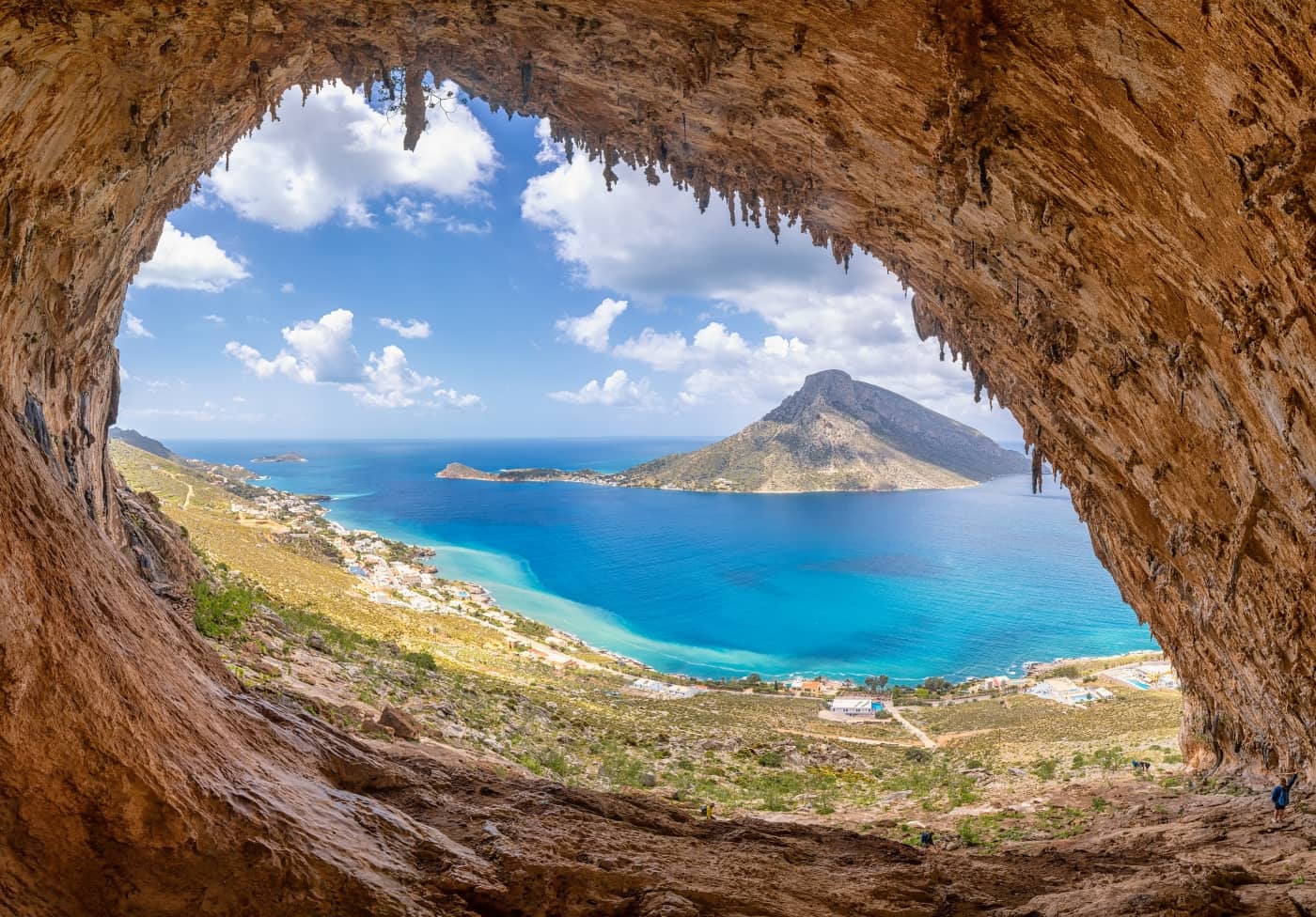
Greece is a mosaic of mountains, deep gorges, trails suspended between sky and sea, seabeds that shimmer with turquoise light, wind-carved cliffs, and villages where time flows slowly, like summer.
For those who love outdoor activities, this country is an inexhaustible oasis, every island, every region, every little bay hides an adventure waiting to be lived.
Here is a small guide to the most exciting outdoor activities from trekking, to climbing along rugged coasts, from diving among ancient shipwrecks right through to snorkeling in some of the clearest waters in Europe, with a few tips on where to do them, when to go, the level of difficulty, and what to expect.
Greece is a land to be explored with your legs as well as your eyes. The islands, with their mountainous terrain and the ancient shepherds’ trails, are a paradise for trekking. The landscape offers routes for everyone: from panoramic walks for beginners to demanding treks on the most mythical mountains of the Mediterranean. The result is always the same, an experience in touch with Mother Nature that clears the mind and offers breathtaking views.
Naxos is the Cycladic queen of trails. Here Mount Zas, the highest point in all the Cyclades (1,004 m), offers a challenging climb but one that is still feasible for moderately trained walkers. The route starts from Filoti and winds through white rocks, ancient terraces, and panoramas that open like curtains onto the sea. Best from April to November.
Beyond the summit, Naxos offers a network of trails perfect for half-day walks. The Chalki – Apiranthos route crosses olive groves, ancient Venetian towers, and traditional white stone villages. The walk between Lefkes and Prodromos, instead, follows an ancient marble-paved road, preserved like a precious relic from the past.
Santorini, although famous for its sunsets, offers one of the most iconic treks in the world: Fira Oia. It is a 10 km itinerary, of medium difficulty, completed in 3/4 hours among volcanic craters, blue domes, and vertiginous calderas. It is ideal from March to early June and from September to November, when the sun is less intense.
In addition to Fira – Oia, Santorini offers the Fira Skaros Rock trek, shorter but spectacular. The trails head towards the volcano of Nea Kameni, among lunar landscapes and fumaroles, and the route from Pyrgos climbs up to the Monastery of Prophet Elias, with 360° views over the island. The best period is March–early June and September–November, when temperatures are milder.
Crete, the largest Greek island, is a true continent for hikers. The Samaria Gorge trek is one of the most fascinating experiences, 16 km of canyon with walls narrowing to 3 meters. Challenging level, but within reach for anyone with a minimum of training. To be done only in summer and autumn when the park is open. Crete also offers less well-known routes such as the Imbros Gorge, the trails of the Lassithi Plateau, or the ascent to Mount Psiloritis (2,456 m), the highest point on the island.
There is no shortage of lesser-known and even more evocative itineraries: the crossing of the Lefka Ori massif (White Mountains), the trails of the Lassithi Plateau among windmills and cultivated fields, or the routes that descend towards remote beaches such as Glyka Nera and Agiofarago. In Crete, trekking can be enjoyed almost all year round, but the best months are April–June and September–November when the temperature is ideal and the light turns golden.
Amorgos, wild and poetic, is a paradise for sea-view trekking. The route from Hozoviotissa to Aigiali is among the most spectacular: steep stretches, panoramic sections, and an almost sacred silence.
Other much-loved itineraries are: Chora – Katapola, a walk that crosses the most historic part of the island; Tholaria – Langada – Aegiali, ideal for discovering the rural side of Amorgos, or trails towards the southern promontories, perfect at sunset.
Difficulty ranges from easy to moderately demanding, but what all routes have in common is the feeling of total immersion in nature. You can hike from April to October, but the best months are May, June, and September.
In Karpathos, the northern part of the island is the hiking heart. It is dominated by the famous Olympos village, a traditional community perched among the mountains that preserves unique customs, traditions, and architecture. From here starts one of the most fascinating treks: the route towards Diafani, which crosses rocky ridges, small isolated chapels, and spectacular landscapes suspended between sea and mountain. The difficulty is medium, suitable for experienced walkers but also for those used to walking in nature.
Another iconic itinerary is the crossing between Avlona and Vroukounta, which leads to a small church carved into the rock where the sea meets a solemn cliff. This trek is a journey into silence, into history, and into the island’s spirituality.
For those who prefer walking near the sea, the route from Lefkos to Sokastro lets you discover a turquoise coast and remote beaches with green promontories overlooking the Aegean. The southern area around Afiartis, although famous for windsurfing, also offers simpler trails, ideal for first-time walkers.
The best period for trekking runs from April to June and from September to November for ideal temperatures, low humidity, and intense colours. In the summer months, longer routes should be tackled early in the morning, due to heat and wind. In Karpathos we have a brilliant local guide, write to us for offers.
Tilos is a small island in the Dodecanese but it contains a huge soul: authentic, silent, natural, and perfect for those looking for quiet treks that are rich in emotion. The island is famous for its ancient paths, used for centuries by shepherds, which connect stone villages, remote bays, solitary monasteries, and panoramic heights.
One of the most distinctive routes is the one that connects Livadia to Mikro Chorio, a ghost village abandoned by its inhabitants in the 20th century. Walking among its empty houses, cobblestones, and the vegetation that has reclaimed the hamlet gives a unique feeling, almost suspended in time. The trek is easy and suitable for everyone, especially at sunset when the atmosphere becomes magical.
Another much-loved itinerary is the one that leads to the Monastery of Agios Antonios, a small white building overlooking a bay with crystal-clear water. The route is short but scenic, perfect for anyone who wants a relaxing trek with a surprising finale. From the village of Megalo Chorio, instead, a steeper path leads to the Medieval Fortress, from which you can overlook the entire island. This trek is short but requires sure footing, and is particularly evocative in the morning hours.
More experienced hikers can explore the northern part of Tilos, a protected area where rare birds of prey live. Here the routes are longer and wilder, immersed in unspoiled nature made of Mediterranean scents, wind-sculpted rocks, and endless sea views.
The difficulty of Tilos trails ranges from easy to moderate, making it an ideal island for contemplative walkers, families, photographers, and travellers who love genuine contact with the environment. The best time to explore it is from March to June and from September to October, when the climate is mild and nature’s colours come alive.
Andros is the most “technical” destination in the Aegean for hikers: it has a network of over 160 km of trails certified “Leading Quality Trails Best of Europe”, perfectly signposted, maintained, and divided by level of difficulty.
The island alternates green hills, streams, waterfalls, ancient stone bridges, remote monasteries, and elegant neoclassical villages. Among the most famous routes we find: Andros Route, a 100 km trail that crosses the whole island; the Menites – Chora path, among fresh-water springs and shady woods and Apikia – Pithara, a walk towards the most romantic waterfalls in the Aegean.
Andros is ideal for those who want to combine hiking with culture, history, and architecture. Spring and autumn are the perfect times to visit.
Mount Olympus in the region of Aetolia-Acarnania, on the mainland, opposite the island of Kalamos, is the most mythical mountain in the world. Its summit, Mytikas (2,918 m), is wrapped in legends and clouds. The trek usually starts from Prionia and climbs towards the Spilios Agapitos refuge, immersed in a majestic forest. From there the route becomes more demanding and requires sure footing, especially in the final stretch towards Mytikas, where you scramble on easy but exposed rock.
Olympus still offers routes for everyone: panoramic walks, medium treks, demanding ascents. The ideal period is June–October, when the snow has melted.
Meteora is one of the most iconic places in Greece: rock towers rising towards the sky and monasteries built on top like eagles’ nests. The trails around Kalambaka and Kastraki allow you to reach monasteries such as Great Meteoron and Varlaam by walking through woods, stairways carved into the rock, and panoramic viewpoints from which you can observe the entire Thessalian plain.
The most famous trek is the Old Stairway, an ancient route used by monks before modern bridges were built. Today it is a medium-difficulty walk that offers a journey back in time. Spring and autumn are the most evocative seasons, with soft light and perfect temperatures.
Epirus is probably the most surprising region of mainland Greece for trekking. The Zagori area is made up of 46 stone villages linked by ancient paths and perfectly preserved Ottoman bridges.
The most famous trek is the Vikos Gorge, the deepest in the world in proportion to its width. The trail descends among forests, emerald-coloured rivers, and walls that rise vertically. Other iconic routes are: Papigo – Drakolimni, a walk to an alpine lake inhabited by small newts; Kipoi – the historic bridges, an itinerary that is cultural and natural at the same time. Epirus is ideal from May to October.
Other perfect regions for walking are Pelion, Pindus, and Laconia.In Pelion you will find trails through woods, traditional villages, and turquoise beaches; in the Pindus you can enjoy alpine treks among dense forests and spectacular peaks, On Mount Taygetos and in the Mani Peninsula (Peloponnese): wild itineraries, sea views, and dramatic scenery. Finally, try a lovely walk at Lake Plastira with its easy family-friendly paths.
Trekking in Greece is not just movement: it is a return to the most authentic nature.
Few people know that Greece is one of the world capitals of climbing. Its limestone rocks, shaped by millennia of sea and wind, offer perfect walls both for beginners and for experienced climbers.
This Dodecanese island is considered one of the best destinations in the world for sport climbing.
Climbing is possible almost all year round, but the best periods are April–June and September–November.
It is the new mainland capital of climbing. Its red walls, up to 250 metres high, offer hundreds of bolted routes. Perfect for those seeking a combination of sea, trekking, and sustained wall climbing.
In Crete, climbing is wilder:
Two small islands that are growing in the climbing world. Tilos, in particular, offers routes right above the sea, perfect for intermediate climbers.
Climbing in Greece is an experience that combines sport, culture, adventure, and sea like nowhere else in the world.
Thanks to the transparency of its seas, among the clearest in the Mediterranean, Greece is a perfect destination for diving and snorkeling. Visibility often exceeds 30–40 metres, temperatures are pleasant from May to November, and the seabed hosts a unique combination of caves, wrecks, posidonia meadows, and vertical walls.
Crete is a true underwater museum. At Skinaria, Bali, Agia Pelagia, and Elounda you will find natural tunnels, deep cobalt-blue waters, and World War II wrecks. Variable difficulty: from beginner sites to advanced routes with scuba tanks. Snorkeling is ideal at Seitan Limania, Balos, and Falassarna.
Karpathos has pristine and uncrowded seabeds. The Pigadia area is rich in marine life, while at Saria you can find submerged caves and canyons.
Corfu, in the Ionian Sea, offers emerald tones, white cliffs, and caves ideal for experienced divers. Snorkeling is spectacular at Paleokastritsa.
Rhodes offers dives in the famous Anthony Quinn Bay, with crystal-clear water and cliffs that drop vertically.
Amorgos, thanks to the film “Le Grand Bleu”, is considered one of the most fascinating islands for deep diving.
The underwater experience in Greece is at the same time relaxing, stimulating, and magical: a different way to discover the wonder of the islands.
Greece is a natural open-air gym: not only trekking, climbing, and diving, but also lesser-known sports that make the trip even more special.
Kayaking is perfect along the rugged coasts of Milos, Koufonissi, and Lefkada. You can enter sea caves, paddling in turquoise waters.
SUP is ideal in sheltered bays: Ammoudi (Santorini), Elafonissi (Crete), Kolymbithres (Paros).
Among the most famous winds in the Mediterranean, the Meltemi offers perfect conditions for sailing sports:
Mainland Greece is also perfect for those who love fresh water:
The lagoons of Messolonghi, Lake Kerkini, the island of Lesbos, the island of Kos, and the island of Cyprus are paradises for photographers and wildlife enthusiasts because they all lie along one of the main migratory routes.
Crete, Kos, Evia, and the Peloponnese offer dirt routes for all levels, with panoramas that constantly change: sea, olive groves, and rural villages.
In Rhodes, Kos, Corfu, and Paros it is possible to ride on the beach at sunset: a unique, gentle, and relaxing experience that even for those who are not passionate about this sport because it offers moments that will remain among the most beautiful of your holidays in Greece.
Ultimately, we can say that Greece is a natural playground, a place where every island and every region tells a different story. From the mountains of the Gods to sea caves, from deep canyons to the clearest seabeds of the Mediterranean, every outdoor activity becomes a journey within the journey.
Whether you are a curious walker, a passionate climber, a lover of the sea, or a simple explorer of beauty, here you will find an experience you will never forget


Contact Us

Compila il form: ti rispondiamo al più presto