★★★★★
257 Reviews
Leggi tutte


Greece is not only sea, golden beaches and fiery sunsets, it is also a land scented with wild sage, freshly baked bread, golden extra virgin olive oil and recipes passed down for centuries. Travelling in Greece also means eating Greece, experiencing it through its flavours, its stories and its gastronomic culture.
In this culinary journey I will guide you through the 10 traditional Greek dishes you must not miss, explaining how they are made, whether they are linked to myths or traditions, what they truly contain from a nutritional perspective, and at the end you will also find the complete recipes to prepare them at home when you feel nostalgic for Greece.
Where to eat it: Crete, especially in the most authentic tavernas of Chania and Rethymno.
How it’s made: a base of paximadi, the typical hard Cretan barley bread, slightly moistened with water or oil. On top, grated fresh tomato, mizithra (a mildly tangy fresh cheese), wild capers and mountain oregano.
Nutritional values: extremely rich in fibre thanks to the barley bread; light proteins; healthy fats from extra virgin olive oil; an ideal dish for those who love to eat healthily.
Curiosities & legends: it is said that Cretan shepherds were already preparing it 2,000 years ago during long days on the highlands.
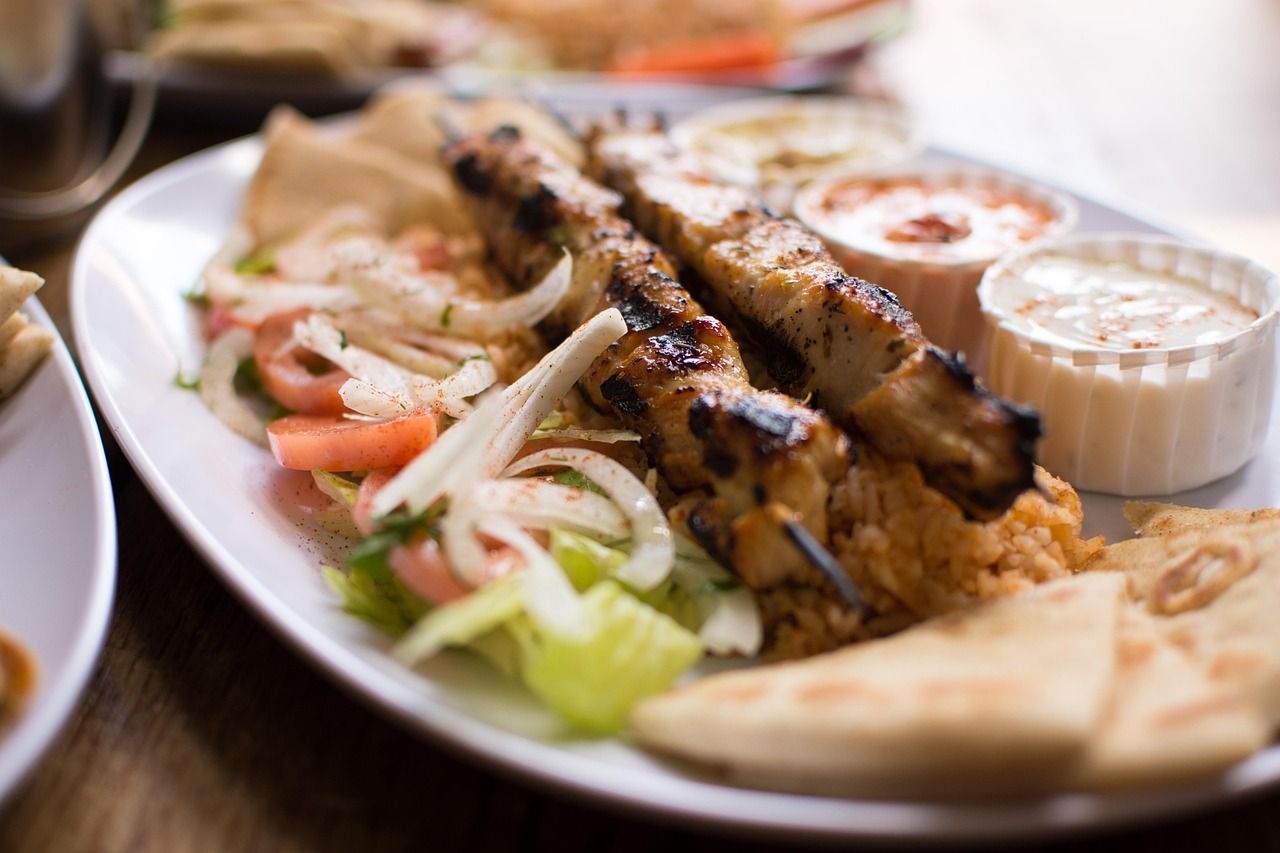
Where to eat it: everywhere, from big cities to the islands. In Athens try those in Monastiraki.
How it’s made: skewers of chicken or pork marinated with lemon, oregano, oil and pepper.
Nutritional values: pure proteins, low in fat (if cooked properly), an excellent energy source on hot days.
Curiosity: archaeologists have found “souvlaki grills” dating back to the Mycenaean period: Greeks have been eating it for at least 3,500 years!
Where to eat it: traditional tavernas, especially in Macedonia, Thessaly and the Peloponnese.
How it’s made: a slice of kefalotyri or graviera cheese, floured and fried until golden.
Nutritional values: very rich in calcium and proteins but with a high caloric content.
Legend: it is said the name derives from the small metal pan “saganaki” also used by ancient sailors to cook fish and cheese during long sea journeys.
Where to eat it: Athens, Thessaloniki, Crete, Rhodes, everywhere in Greece, but the best and most authentic versions are found only in family-run tavernas. It must strictly be served on a plate, not in a terracotta dish — moussaka in terracotta is usually a frozen product.
How it’s made: layers of fried eggplants, cinnamon-spiced meat ragout, potatoes and soft béchamel.
Nutritional values: a rich and complete dish, high energy content, an excellent source of iron.
Curiosity: the modern version was codified by chef Tselementes in the 1920s to make the dish “more European”.
Where to eat them: in village tavernas; in Naxos and Tinos they are exceptional.
How it’s made: meatballs of ground meat with fresh mint, onion, soaked bread and spices.
Nutritional values: rich in proteins; if fried they are caloric, also excellent baked.
Legend: once they were offered during religious festivities as a symbol of hospitality.
Where to eat it: in the Cyclades and the Dodecanese, especially by the sea.
How it’s made: grilled octopus after a long sun-drying process to soften its meat.
Nutritional values: lean proteins, very low fat, rich in minerals.
Curiosity: Greek fishermen still beat the octopus on the rocks to make it more tender!
Where to eat it: all over Greece, from Athens to Thessaloniki, and across the islands.
How it’s made: chicken, pork or lamb cooked on a vertical spit, served in pita with tomato, onion, tzatziki and fries.
Nutritional values: balanced if consumed in the “pita without fries” version; very energetic.
Gastronomic myth: it already appears in ancient Persian and Byzantine descriptions, later arriving in the Greek world.
Where to eat it: perfect in Cretan and Macedonian tavernas and in Greek homes, though nowadays it is found everywhere in Greece.
How it’s made: Greek yogurt, grated cucumber, garlic, vinegar and dill.
Nutritional values: very light, protein-rich, perfect in Mediterranean diets.
Curiosity: according to some studies it derives from ancient Balkan sauces offered to warriors after battle.
Where to eat it: bakeries and tavernas, especially in Epirus and Macedonia.
How it’s made: crispy phyllo pastry with a filling of spinach, feta, wild herbs and spring onion.
Nutritional values: an excellent source of iron, vitamins and proteins; light but nutritious.
Curiosity: each village has its own secret version passed down among the women of the family.
The complete recipes
Where to eat them: in specialised pastry shops.
How it’s made: small balls of leavened dough fried and covered with honey, cinnamon or chocolate.
Nutritional values: a caloric but irresistible dessert, rich in carbohydrates and natural sugars from honey.
Legend: in ancient Greece they were offered to the winning athletes of the Olympics.
Below you will find the traditional recipes, easy to prepare at home:
1 barley paximadi
2 ripe tomatoes
fresh mizithra to taste
extra virgin olive oil, salt, oregano, capers
Moisten the paximadi with a little water.
Grate the tomatoes.
Add mizithra, capers and oregano.
Dress with plenty of olive oil.
Tip: prepare them beforehand so the bread can absorb all the juices and aromas of the ingredients.
chicken, pork, mutton or lamb cut into cubes,
lemon,
oil,
oregano,
salt,
pepper
Marinate the meat for 1 hour.
Skewer it.
Grill until golden.
kefalotyri or graviera cheese,
flour,
oil.
Flour the cheese.
Fry for 2–3 minutes per side.
Serve with lemon.
eggplants,
potatoes,
meat ragout,
béchamel.
Fry the eggplants and potatoes.
Prepare a spiced ragout and add cinnamon to taste.
Assemble in layers as if making lasagna.
Bake for 45 minutes at 180°C.
beef and pork (usually mixed),
mint,
soaked bread,
egg,
onion.
Mix everything together.
Form small balls.
Fry or bake.
octopus,
oil,
lemon,
oregano
Beat the octopus.
Cook slowly.
Grill the surface.
marinated meat (chicken, pork, mutton, lamb),
pita,
tomato,
onion,
tzatziki
fries
Cook the meat on the spit.
Slice it thinly.
Assemble inside the warm pita with all the other ingredients.
yogurt,
cucumber,
garlic,
vinegar,
dill
Grate the cucumber and squeeze well.
Combine yogurt and all the other aromatics.
phyllo pastry,
spinach,
feta,
onion,
spring onions,
mint,
eggs
Sauté the spinach.
Prepare the sauté with onions and spring onions.
Add feta, herbs and beaten eggs to the sauté and spinach.
Fill the phyllo and bake for 45 minutes at 180°C.
flour,
yeast,
water,
honey,
cinnamon
Prepare the batter.
Fry small balls.
Cover with honey and cinnamon or drizzle with chocolate.
These 10 dishes are not just “what to eat in Greece”; they are a journey into Greek culture, through fragrances, stories, landscapes and traditions that make this country one of the most extraordinary destinations in the world.



Contact Us

Compila il form: ti rispondiamo al più presto