★★★★★
257 Reviews
Leggi tutte


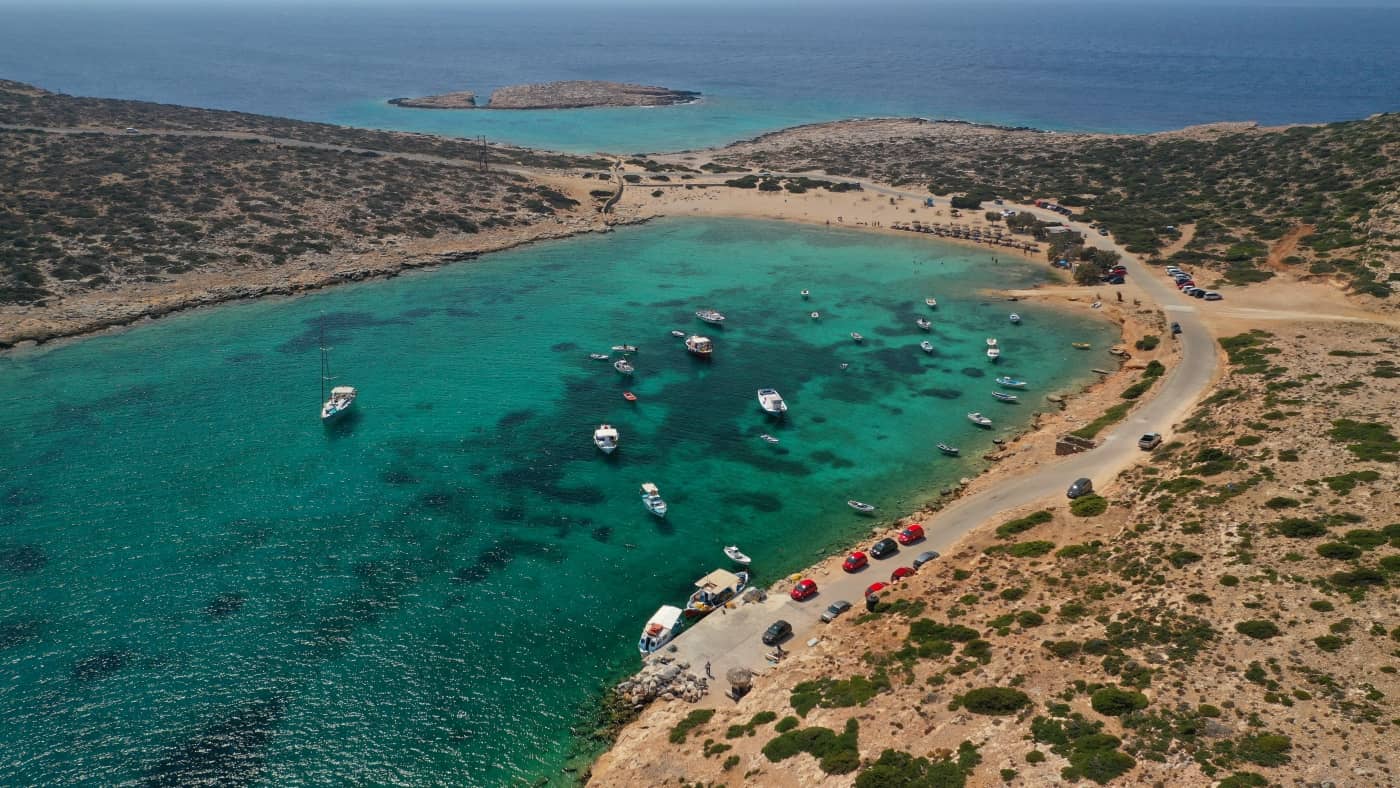
The Greece we all know is not just white houses with blue windows and crystal-clear waters. In reality, it is a delicate balance between sea, wind, land and the people who live their lives on islands that, despite their size, are fragile and particularly rich in biodiversity.
Choosing to embark on a sustainable journey means completely changing your point of view: rather than simply consuming a destination, as unfortunately happens all too often nowadays, it means experiencing it with respect and care. There is no need to go on exhausting tours, rushing from one beach to another just to be able to say, “I’ve been there.” Instead, listen to and follow the rhythm of the island. This is the secret to experiencing Greece like a local rather than just another tourist.
You might think that sustainable travel means giving something up. On the contrary, we believe it is a more empathetic and meaningful way to travel. Imagine waking up early and walking along a path surrounded by centuries-old olive trees, buying freshly baked bread from the village bakery, enjoying genuine, locally sourced food in a taverna where only local ingredients are used, or staying in a family-run accommodation where hospitality is simply a natural form of kindness. This is what sustainable travel can give you and, when you think about it, that is quite something.
Greece is one of the most complete and beautiful destinations in Europe, even for those who want to travel consciously and respectfully. From the bottom of our hearts, we hope this way of travelling becomes increasingly common, bringing us back to a time when having very little could still make you feel like a king.
Transport is usually the part of a journey with the greatest environmental impact because most means of transport use fuels that cause pollution. Whenever possible, it is therefore better to choose a direct flight rather than one involving multiple connections.
A good idea could be to travel to Athens and then continue by sea if your destination is one of the islands, or by train if you are travelling across the mainland.
High-speed ferries consume more fuel than conventional ferries, so choosing a larger traditional ferry can be a better option. Yes, it may be slower, but it gives you the chance to enjoy the journey itself, which is also part of the experience.
A car or scooter is undoubtedly convenient, allowing you to go almost anywhere relatively quickly. However, whenever possible, choose a hybrid or electric vehicle. Better still, opt for means of transport that do not require fuel, such as:
Overtourism is one of the main problems affecting the Greek islands and, let’s be honest, by now almost the entire world. The ideal periods for a green holiday on the islands are undoubtedly May, October, the first two weeks of June and from mid-September onwards. As for the rest of Greece, practically any time of year can be suitable because, as you already know, Greece is not just about the sea and islands. The mainland is equally beautiful and rich in history, nature and traditional culture.
The reasons for choosing these periods are:
It is therefore better to avoid the busiest summer months, particularly late June, July and August, when everywhere is crowded and water and energy infrastructures are placed under enormous pressure. So don’t be surprised if you experience frequent blackouts or restrictions on water use.
Travelling during the low or shoulder season means enjoying the island more while respecting its delicate balance, something extremely important for protecting these little corners of paradise.
Typical eco-friendly accommodation can include:
✔ A family-run guesthouse where you can truly feel at home
✔ A local agritourism property where you can stay in close contact with nature
✔ A hotel with solar panels to reduce pollution and save energy
✔ Renovated traditional houses. These are everyone’s dream!
Things to check when looking for eco-friendly accommodation include:
Always remember that choosing local, family-run accommodation also means supporting the island’s economy, something that should never be underestimated.
✔ Trekking between monasteries and villages will feel like travelling back in time and discovering the island’s authentic soul
✔ Snorkelling with your own equipment, if you can fit it into your suitcase
✔ Tastings at local farms. One of the best ways to support the local economy while discovering flavours created for locals rather than just tourists.
✔ Taking part in traditional festivals. This is where the real fun begins: traditional dancing, enormous meals and new friendships. What more could you ask for?
✔ Visiting farmers’ markets where you can discover and try new flavours
Eco-friendly travel prioritises cultural and natural experiences rather than artificial attractions.
Greece is rich in archaeological sites and monasteries that blend beautifully with the surrounding landscape.
There are some fundamental rules that should be followed out of respect for these places:
Visiting responsibly means preserving these places for the future.
Because Greece is fragile, just like our delicate planet.
Many islands have limited water resources. Many communities depend on tourism but do not want to be overwhelmed by it, and who could blame them? The pursuit of money changes everything and everyone, unfortunately often for the worse. Let’s try to protect what has not yet been lost!
Eco-friendly travel:
It is not about spending more or less. It is about making better choices and creating unforgettable memories.
Sustainable travel in Greece is not simply a passing trend. It is a return to the true essence of travelling: carefully choosing a less crowded island, eating local food, walking among olive trees and white chapels, respecting the sea and its silence. It means returning home with something much more valuable than just another holiday.
Greece is a gift, just like the entire universe. It is up to us to protect it and preserve it like a precious jewel.
Some islands experience less tourist pressure than others, although we believe that in a few years it may become extremely difficult to find an island that has not been overwhelmed by tourism. So where should you go for an eco-friendly holiday? It is certainly better to avoid the most famous destinations during the high season and instead choose islands that may require a little more effort to reach but reward you with this kind of experience.
Here are the 5 Greek islands that, today, truly embody the concept of sustainability in 2027, not because it is fashionable, but because sustainability is part of their identity.
Small and secluded Tilos is an example of the energy transition taking place on the Greek islands. It is one of the first, and unfortunately still one of the few, Mediterranean islands to have committed itself to becoming almost energy independent thanks to the installation of wind and solar power systems.
On its own, the island manages to:
Here, life revolves entirely around the sea and close contact with nature. No nightlife, no super-fashionable hotspots, just real and genuine experiences. You can fill your days with activities such as:
Alonissos is renowned for its magnificent National Marine Park, the first to be established and officially recognised in Greece as well as the largest protected marine area in Europe
Here, conservation is not a business. It is a reality.
Ikaria is famous as a “Blue Zone”. The local population has a considerably longer life expectancy than average. The exact reason remains something of a mystery, but the fact is that Ikaria has quite a few people over the age of one hundred, and even its grandparents don’t always seem particularly old.
An island that remains authentic and eco-friendly because:
When it comes to activities, everything is approached with the same calm and relaxed attitude. You can:
You could say that sustainability in Ikaria is fundamentally cultural as well as environmental.
Amorgos is a beautiful island where silence is a constant companion. Anyone who decides to travel this far should understand that they are arriving somewhere shaped by privacy, trails and a deep sea with a uniquely intense blue colour.
An island where simple things make it eco-friendly, such as:
Amorgos is undoubtedly an ideal island for anyone who wants to spend some time alone with themselves.
Samothrace is undoubtedly one of Greece’s least touristy islands, perhaps because simply getting there is already part of the journey. Its landscape and wild nature, however, make it truly unique.
A mysterious island wrapped in a very particular atmosphere that only those who have been there can truly understand. So why is it considered one of Greece’s sustainable islands?
This is the island for anyone looking for pure nature with very few compromises.
✔ Looking for a real example of renewable energy? → Tilos
✔ Do you love protected seas and biodiversity? → Alonissos
✔ Looking for a slow and authentic lifestyle? → Ikaria
✔ Prefer trekking and spirituality? → Amorgos
✔ Dreaming of wild nature and fewer tourists? → Samothrace
Eco-friendly travel in Greece is not simply about choosing a lesser-known island. It is about choosing a different way of experiencing the world.
If you would like a unique itinerary, write to us at info@meraviglioseisolegreche.com




Pianifica la tua vacanza nelle isole greche
Niente pacchetti standard. Contattaci per un itinerario su misura che cattura l'anima delle isole.
Massimo 2 preventivi gratuiti
Dalle acque cristalline di Mykonos ai tramonti mozzafiato di Oia, il nostro team di esperti locali è pronto a curare ogni dettaglio della tua fuga greca. Non siamo solo un'agenzia — siamo il tuo ponte verso l'Egeo.
Risposta immediata garantita